TL;DR

Get movie nights delivered free with Prime
- Fast, free delivery on millions of items
- Prime Video, Amazon Music and more included
- Member-only deals all year
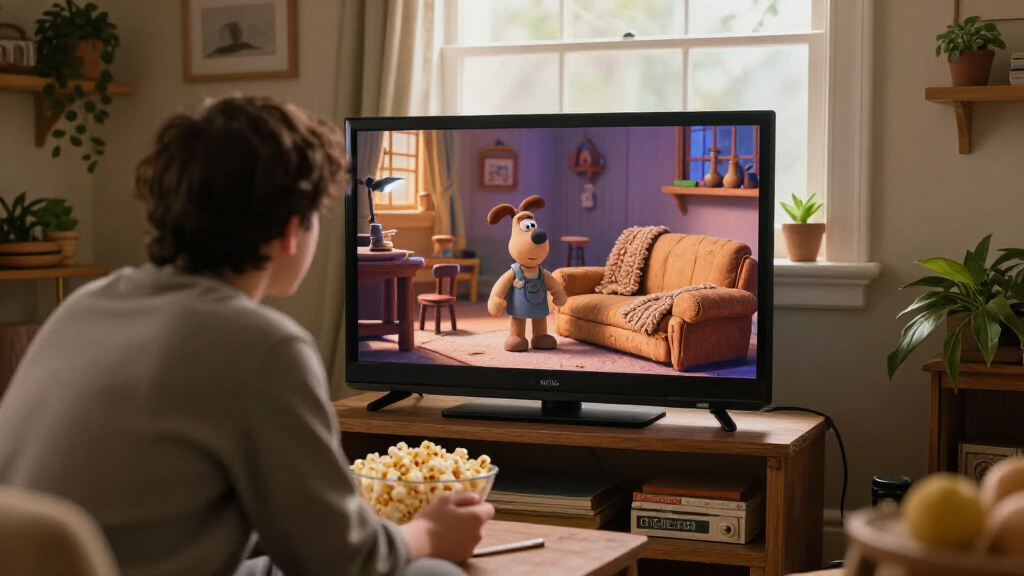
An Animation Obsessive report revisits Nick Park’s long, largely solo production of A Grand Day Out, which began as a film-school graduation project in 1982 and premiered in 1989. Park said he did about 90% of the film himself; the short later won a BAFTA and introduced the characters and visual style that shaped his career.
Nick Park made about 90% of A Grand Day Out himself, working on the stop-motion film for much of the 1980s before it premiered at the Bristol Animation Festival in November 1989. A new retrospective from Animation Obsessive revisits the production, which began as Park’s ambitious graduation project and became the starting point for the Wallace and Gromit characters and the style associated with his later work.
Park began making the film in 1982 while studying at the National Film and Television School. He needed characters for his graduation film and returned to sketches in an old notebook. The original concept sent a man and an animal to the moon in a homemade rocket, with cheese providing the reason for the journey. Wallace initially had a moustache, while Gromit began as a cat before Park changed him into a dog because he found dogs easier to model.
The production had some outside help, but the project was largely Park’s. He said he worked on the first script with Steve Rushton, a friend who wrote children’s books. Animators Alison Snowden and David Fine made some props, and a school technician constructed the rocket’s illuminated console. Park received Plasticine from its manufacturer, while actors Peter Sallis and Peter Hawkins supplied voices as a favor. The available budget restricted how much of the work he could hire out.
Park also changed the characters while animating. He removed Gromit’s dialogue in the first week of shooting because it was difficult to animate, discovering that the dog’s thoughts could be conveyed through his eyes and expressions. Wallace’s mouth grew during a scene in which he says “cheese”: Park recalled making it wider than the character’s head. These choices helped establish the visual language later identified with Wallace and Gromit.
A Solo Film Set Park’s Style
The production matters because it shows how a film made under tight limits became a foundation for one of British animation’s best-known character duos. Park later described Wallace and Gromit as the first characters into whom he had put his heart. He said they gave him his style, including Wallace’s exaggerated mouth movements and Gromit’s expressive eyes.
The film also helped bring Park to wider attention. It was screened alongside Creature Comforts at the Bristol festival. Creature Comforts won the Academy Award, while A Grand Day Out received a BAFTA and found what Park described as more low-key success. The retrospective links the project’s modest early reception to the larger audience that followed when the work aired on Channel 4 in 1990.
For readers interested in animation, the account offers a specific example of how practical constraints can shape a production’s form. Gromit’s silence, for instance, was not simply a character premise from the outset: Park said it followed from the difficulty of animating speech. The result became central to how the character communicates.
As an affiliate, we earn on qualifying purchases.
From Film-School Project to Festival
A Grand Day Out took shape over several years rather than through a fully staffed studio production. Park described it as an overambitious graduation project and said he considered quitting many times. The film’s central idea remained a journey to the moon, but its characters and details developed during production as Park worked through the practical demands of stop-motion animation.
When Aardman founders David Sproxton and Peter Lord visited Park at film school, he had completed only part of the work, including construction of the cellar set and rocket sequence. Sproxton later recalled that the project’s use of Plasticine and sets showed “a real endeavor” and that the work seemed different. Aardman kept in contact with Park over the next two or three years.
At the 1989 festival, the film received attention but did not immediately bring extensive media coverage, according to Animation Obsessive. The newsletter cites an early magazine description calling it a “marvelous Lancastrian model animation.” After its later Channel 4 broadcast, Park’s work reached a much broader audience. The retrospective presents the years of solo production as the period in which the characters and approach that became associated with him were formed.
“I did probably 90% of it myself.”
— Nick Park, as quoted in the Animation Obsessive report
As an affiliate, we earn on qualifying purchases.
What the Retrospective Leaves Open
The report presents a retrospective account rather than announcing a new film or production decision. Its central “90%” figure is Park’s own approximate estimate; the material does not provide a production breakdown that independently measures the share of work he completed. It also does not specify how the remaining work was divided among the named helpers or other people involved.
The supplied account does not give a precise date for the film’s Channel 4 broadcast, beyond saying it aired in 1990. It also does not quantify the audience response or media attention following that broadcast. The report describes the film’s success as relatively low-key compared with Creature Comforts, but offers no figures for a direct comparison.
As an affiliate, we earn on qualifying purchases.
No New Production Announced
Animation Obsessive’s newsletter frames the piece as a look back at Park’s early career and the making of A Grand Day Out. The source material does not announce a follow-up project, new Wallace and Gromit release, or additional production milestone. Readers can take the article as a retrospective account of how Park developed the film and its characters, rather than as news of a current studio development.
The next relevant milestone in the story’s timeline is already part of its history: the film’s 1989 festival premiere, followed by its Channel 4 airing in 1990 and its BAFTA recognition. The newsletter also notes that Creature Comforts, shown alongside it, was the Academy’s choice. No further details about future Wallace and Gromit projects are provided in the source.
As an affiliate, we earn on qualifying purchases.
Key Questions
What does “90% alone” refer to?
It refers to Nick Park’s estimate that he did probably 90% of the work on A Grand Day Out. The report does not provide an independent production tally.
When did Park start making A Grand Day Out?
Park began the film in 1982, while he was a student at the National Film and Television School. It premiered at the Bristol Animation Festival in November 1989.
Who helped Park make the film?
The report names Steve Rushton, who worked with Park on the first script; animators Alison Snowden and David Fine, who made some props; a school technician who built the rocket console; and voice actors Peter Sallis and Peter Hawkins, who contributed as a favor.
Why does Gromit not speak?
Park said he removed Gromit’s dialogue during the first week of shooting because speech was difficult to animate. He realized he could communicate the character’s thoughts through his eyes and expressions.
What recognition did A Grand Day Out receive?
The film received a BAFTA. At the Academy Awards, Creature Comforts—not A Grand Day Out—was the Academy’s pick, according to the retrospective.
Source: hn
Halloween Picks
halloween
As an affiliate, we earn on qualifying purchases.