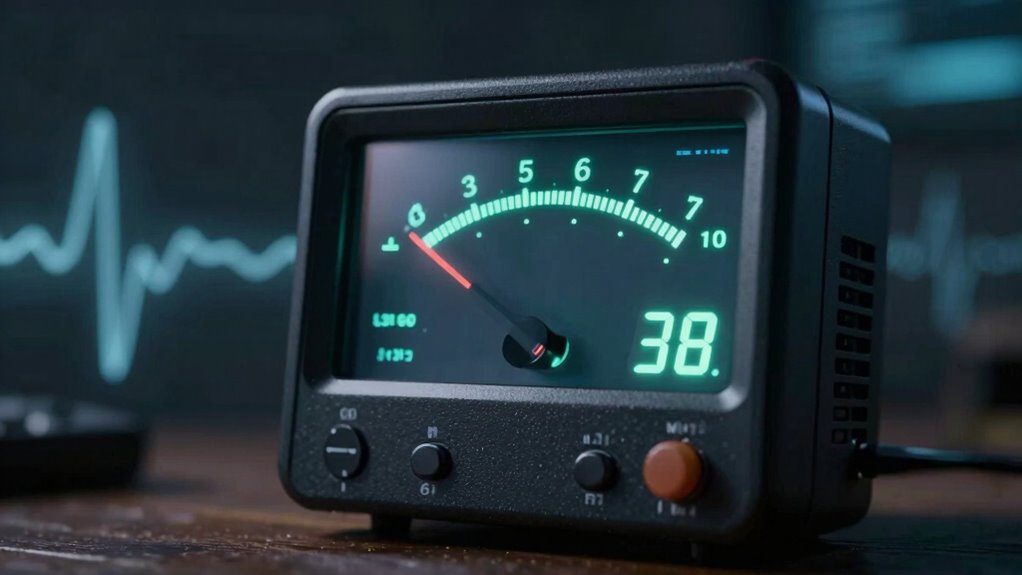

Sound level meters can detect and measure invisible or inaudible phantom noises caused by structural vibrations, electrical interference, or high-frequency emissions. These tools reveal hidden noise levels that might exceed safe limits, even when you can’t hear them. By uncovering these unseen sounds, you gain a fuller picture of your environment’s acoustic landscape. Continuing to explore these details can help you understand the true sources of noise pollution and its potential health impacts.
Open a free Amazon Business account
Business pricing, bulk buying and tax-exempt orders.
As an affiliate, we earn on qualifying purchases.
Key Takeaways
- Sound level meters detect high-frequency or ultrasonic emissions that are inaudible to humans but contribute to phantom noises.
- They reveal environmental noise levels that exceed safety thresholds despite the absence of visible sources.
- Measurements help identify hidden or structural vibration sources causing inaudible high-frequency sounds.
- They provide comprehensive acoustic profiles, uncovering noise pollution impacts invisible to the naked ear.
- Data from sound level meters guide effective noise mitigation strategies for sensitive or industrial environments.
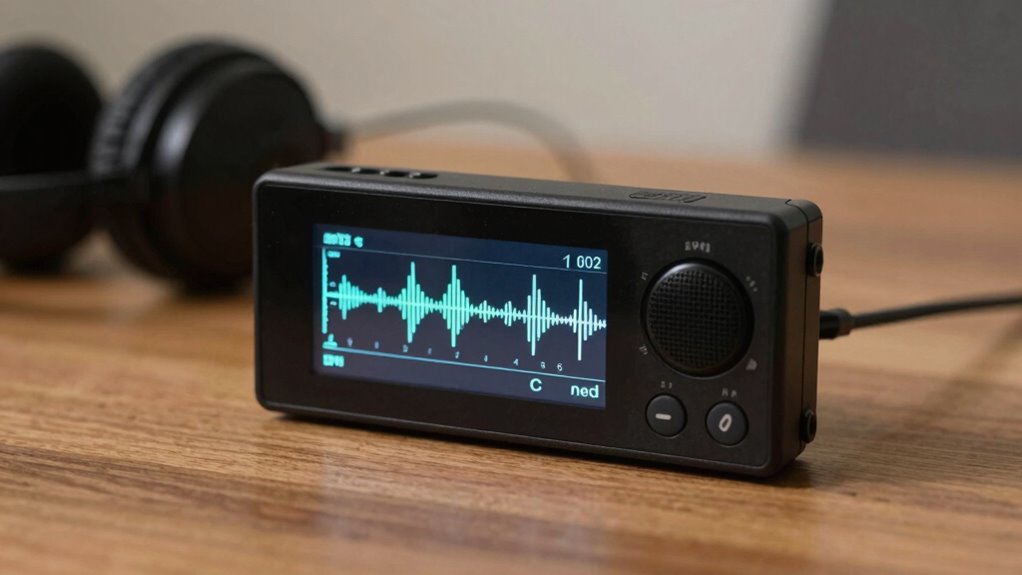
Sound level meters are essential tools for accurately measuring noise levels in various environments, but they can sometimes pick up what are known as phantom noises—unexplained or seemingly invisible sounds that aren’t immediately audible to humans. These phantom noises often reveal more about the environment’s acoustic landscape than you might expect, especially when it comes to understanding noise pollution. When you use a sound level meter to perform acoustic measurements, you might notice readings that don’t correlate with what you hear. These hidden or inaudible sounds can be caused by a variety of factors, including structural vibrations, electrical interference, or high-frequency emissions from equipment.
Phantom noises are particularly noteworthy because they can contribute to noise pollution without your awareness. Even if your ears don’t perceive the sound, the sound level meter detects the energy in the environment. This discrepancy highlights the importance of acoustic measurements in identifying sources of noise pollution that might otherwise go unnoticed. For instance, industrial machinery, HVAC systems, or electrical devices might emit ultrasonic or infrasonic sounds that aren’t audible to humans but still affect the environment and your health. By capturing these sounds, sound level meters provide a fuller picture of the environment’s acoustic profile, revealing potential issues that require mitigation.
Phantom noises reveal hidden environmental impacts beyond human hearing, highlighting the importance of comprehensive acoustic measurements.
What makes phantom noises intriguing is their ability to influence noise pollution levels subtly yet profoundly. They can create a constant background hum or high-frequency buzz, impacting nearby communities or workplaces without obvious signs. When you analyze the data from your measurements, you might find noise levels exceeding safe limits even when no apparent noise source is visible. This underscores the importance of extensive acoustic measurements, especially in sensitive settings like hospitals, schools, or residential areas near industrial zones. Environmental noise can sometimes be difficult to detect without specialized equipment, emphasizing the need for precise measurement tools. Additionally, understanding the acoustic landscape of an environment can help identify hidden sources of noise that might otherwise be overlooked. Recognizing the ultrasonic or infrasonic emissions can further aid in designing effective noise mitigation strategies. Moreover, awareness of these inaudible sounds can help mitigate long-term health effects associated with noise exposure.
Furthermore, phantom noises can sometimes be mistaken for external noise sources, making it challenging to identify and address the true origins of the problem.
In essence, sound level meters help you uncover the unseen components of noise pollution, giving you a clearer understanding of the environment’s true soundscape. Phantom noises serve as a reminder that audible sound isn’t the only factor affecting noise levels; some noise exists beyond human perception but still impacts well-being and comfort. Recognizing these invisible sounds enables you to implement better noise control strategies, ensuring healthier, quieter environments. So, when you’re performing acoustic measurements, keep in mind that what the meter detects can tell you much more than what you hear, revealing a hidden world of noise that shapes your surroundings in subtle yet impactful ways.
sound level meter for ultrasonic noise detection
As an affiliate, we earn on qualifying purchases.
As an affiliate, we earn on qualifying purchases.
Frequently Asked Questions
Can Sound Level Meters Detect Ultra-Low or Ultra-High Frequency Noises?
Sound level meters primarily detect frequencies within the human hearing range, typically 20 Hz to 20 kHz. They struggle with ultra-low or ultra-high frequency noises outside this range. To accurately measure these, you need specialized equipment and proper calibration techniques. Regular calibration guarantees your meter accurately captures the intended frequency ranges, but for extreme frequencies, consider using frequency analyzers designed specifically for ultra-low or ultra-high frequencies.
Are There Specific Settings for Detecting Different Types of Phantom Noises?
Yes, there are specific settings you can adjust on sound level meters to detect different types of phantom noises. You might face calibration challenges and need to tweak sensor sensitivity to pick up ultra-low or ultra-high frequencies accurately. By customizing these settings, you improve detection of specific noise types, ensuring you capture even subtle or elusive phantom sounds effectively. Always verify calibration for precise readings tailored to each noise profile.
How Do Background Environmental Factors Affect Measurements of Phantom Noises?
They say, “Forewarned is forearmed,” and environmental factors greatly influence your measurements of phantom noises. Background interference like wind, traffic, or other ambient sounds can skew readings, making calibration a challenge. These factors may cause false positives or mask actual noises. To guarantee accuracy, you need to minimize environmental interference and regularly calibrate your sound level meter, so your readings truly reflect the phantom noises rather than external disturbances.
Can Sound Level Meters Distinguish Between Real and Perceived Sounds?
Sound level meters can’t directly distinguish between real and perceived sounds because perception discrepancies and psychoacoustic effects influence what you hear. They measure sound pressure levels objectively but don’t account for how your brain interprets those sounds. So, even if the meter detects a noise, your perception might make it seem louder, softer, or even nonexistent. This disconnect highlights the importance of combining measurements with understanding human perception for accurate noise assessment.
What Are the Limitations of Sound Level Meters in Diagnosing Phantom Noises?
Like trying to catch shadows in a fog, sound level meters have their limits when diagnosing phantom noises. Calibration accuracy can drift, making your readings unreliable, while noise interference from other sources muddles the true signal. These factors can hide or distort the subtle whispers of phantom sounds, leaving you with an incomplete picture. Ultimately, these limitations mean you need additional tools and careful interpretation to truly understand elusive auditory phenomena.
professional noise measurement device
As an affiliate, we earn on qualifying purchases.
As an affiliate, we earn on qualifying purchases.
Conclusion
Using sound level meters, you uncover the shocking truth behind phantom noises—no more mysterious whispers in the night. These devices reveal that what feels like a ghostly presence is often just a tiny, overlooked whisper of sound, amplified beyond perception. So, next time you hear those eerie, unexplainable sounds, remember: with a sound level meter, you hold the power to silence the supernatural and uncover the real story lurking behind the noise.
environmental noise monitoring meter
As an affiliate, we earn on qualifying purchases.
As an affiliate, we earn on qualifying purchases.
high-frequency sound level meter
As an affiliate, we earn on qualifying purchases.
As an affiliate, we earn on qualifying purchases.
Fall Picks
fall essentials
As an affiliate, we earn on qualifying purchases.