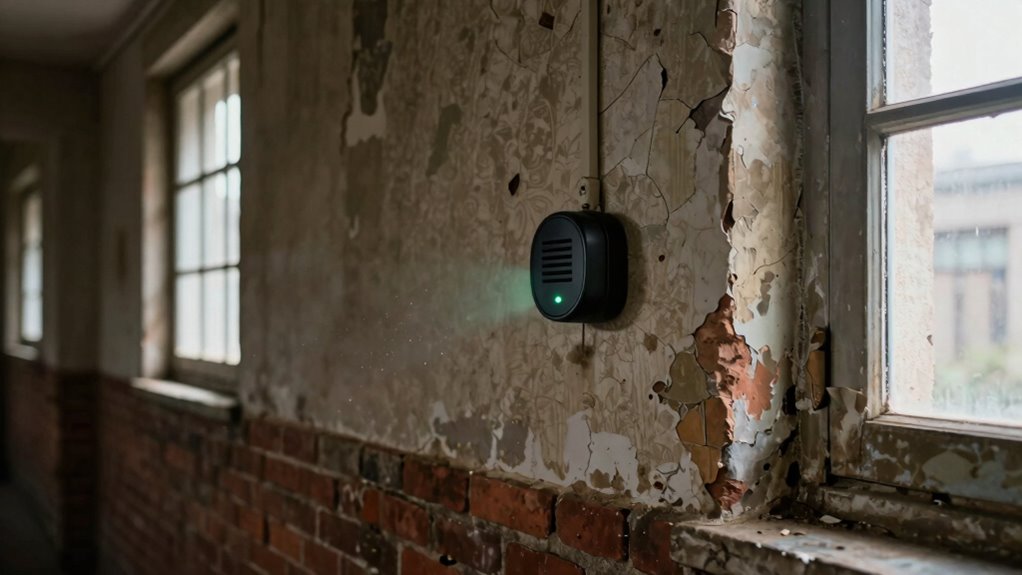

You should install CO2 detectors in old buildings to guarantee safe airflow and prevent dangerous CO2 buildup that often goes unnoticed. Without modern ventilation or HVAC systems, occupants risk exposure to unsafe levels, especially during busy times. Discreet, wireless detectors can be installed without compromising the building’s historic features, helping you meet safety standards while preserving character. Keep exploring to discover how integrating these devices balances safety with preservation efforts.
Key Takeaways
- Old buildings often lack modern ventilation, increasing the risk of unnoticed dangerous CO2 buildup.
- CO2 detectors provide early alerts, ensuring occupant safety without altering historical architecture.
- Installing discreet, wireless detectors maintains the building’s aesthetic while enhancing safety compliance.
- Proper CO2 monitoring helps meet updated safety regulations for heritage and older structures.
- Integrating CO2 detectors supports long-term preservation by preventing safety hazards without invasive modifications.
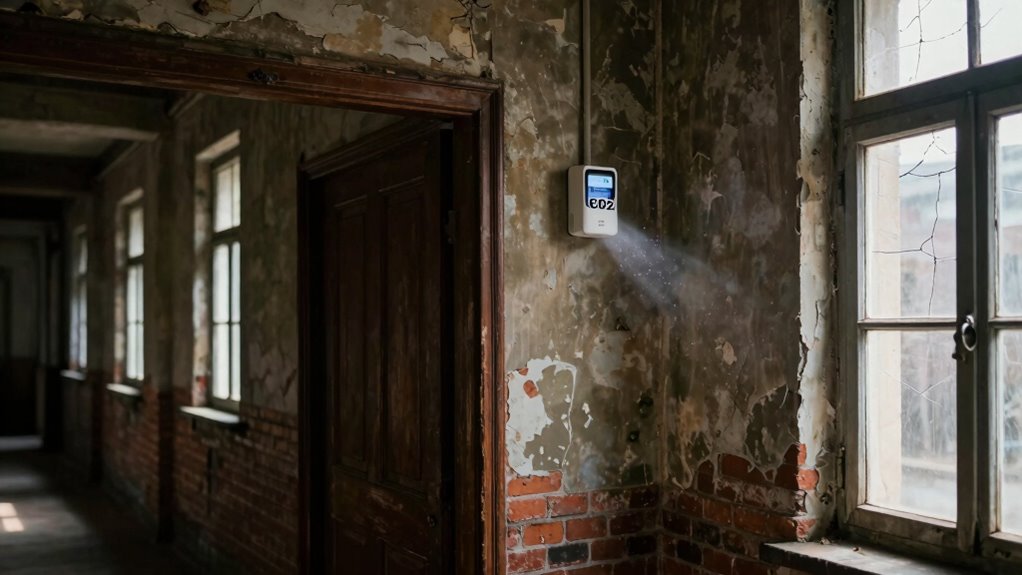
Old buildings often lack modern ventilation systems, making it easy for carbon dioxide (CO2) levels to rise unnoticed. Without proper airflow, occupancy can lead to dangerous CO2 buildup, risking your health and safety. This is especially true in structures that haven’t been retrofitted with contemporary HVAC systems, which are often limited or absent due to preservation concerns. You might wonder if installing new technology contradicts the building’s historical preservation, but the truth is, safety doesn’t have to come at the expense of heritage. Building regulations now recognize the importance of maintaining historical integrity while ensuring occupant safety, encouraging the integration of discreet CO2 detectors that don’t compromise architectural features.
When you’re working within the framework of strict building regulations, you’re often guided to find a balance between preservation and safety upgrades. Modern CO2 detectors are compact, wireless, and can be installed in less conspicuous areas, blending seamlessly with the building’s aesthetic. Their presence is a small yet essential step toward safeguarding everyone who spends time inside. Not only do these detectors alert you to dangerous CO2 levels, but they also help you comply with updated safety standards that many jurisdictions now require for older structures. This compliance isn’t just about avoiding fines; it’s about actively protecting your staff, visitors, and residents.
In terms of historical preservation, you might worry about disrupting the building’s character. However, integrating CO2 detectors is a minimally invasive process. Many models are designed to be unobtrusive and can be mounted discreetly in existing fixtures or behind decorative elements. Installing these devices respects the building’s original design while upgrading its safety features. Additionally, understanding building regulations can help you navigate the requirements for safety upgrades in heritage structures. Furthermore, modern regulations support such enhancements, emphasizing that preservation isn’t just about maintaining appearance but ensuring the long-term usability and safety of historic structures. Properly integrating these modern devices demonstrates that safety and preservation can coexist harmoniously.
wireless CO2 detector for old buildings
As an affiliate, we earn on qualifying purchases.
As an affiliate, we earn on qualifying purchases.
Frequently Asked Questions
How Often Should CO2 Detectors Be Calibrated in Old Buildings?
You should calibrate your CO2 detectors at least once a year for proper detector maintenance. Regular calibration guarantees accurate readings, especially in old buildings where environmental conditions might fluctuate. Keep an eye on the manufacturer’s recommendations, as some detectors may require more frequent calibration. Consistent calibration helps prevent false alarms and guarantees reliable detection, making it an essential part of your overall safety and maintenance routine.
Are CO2 Detectors Effective in Detecting Other Indoor Air Pollutants?
CO2 detectors mainly monitor carbon dioxide levels, but they can indirectly indicate poor indoor air quality caused by insufficient ventilation. However, they aren’t designed to detect other pollutants like VOCs or radon. To guarantee accurate readings, you should focus on proper detector placement—near sources of pollution and away from drafts. While helpful, CO2 detectors alone don’t provide a complete picture of indoor air quality, so consider additional sensors for thorough monitoring.
Can CO2 Detectors Trigger False Alarms in Old Structures?
Yes, CO2 detectors can trigger false alarms in old structures, especially if placed improperly. To prevent false alarms, focus on false alarm prevention by placing detectors away from drafts, vents, or sources of combustion fumes. Proper detector placement is essential; avoid areas with high humidity or dust, which can skew readings. Regular maintenance and calibration also help guarantee reliable operation and reduce false alarms in older buildings.
What Is the Typical Lifespan of a CO2 Detector?
You should replace your CO2 detector every 5 to 7 years, depending on the manufacturer’s guidelines. Regular sensor maintenance is key to reliable detection, so check and clean your detector regularly. Proper detector placement also helps guarantee accurate readings; keep it away from drafts, vents, or areas with high humidity. Doing these steps guarantees your CO2 detector functions effectively, keeping you safe in old buildings.
Do All Old Buildings Require the Same Type of CO2 Detector?
Imagine a dim, dusty hallway where stale air lingers—every old building has unique needs. Not all require the same type of CO2 detector; some demand highly sensitive models for tight spaces, while others need rugged units for larger areas. You must consider building ventilation and air quality standards, ensuring your detector fits the space. Tailoring your choice keeps the air fresh, safe, and compliant with regulations.
As an affiliate, we earn on qualifying purchases.
Conclusion
Think of CO2 detectors as the vigilant guardians of your old building, quietly watching over everyone inside. I once visited a century-old library where a simple detector alerted staff to dangerous air levels before anyone felt unwell. Just like a smoke alarm warns you of fire, CO2 detectors are your silent sentinels, preventing disaster. Installing one isn’t just smart—it’s essential to keep the air safe and your building’s history alive for generations to come.
compact CO2 alarm for heritage properties
As an affiliate, we earn on qualifying purchases.
As an affiliate, we earn on qualifying purchases.