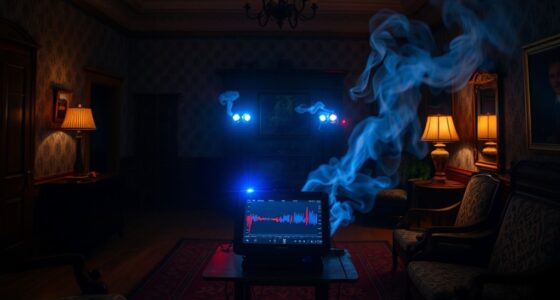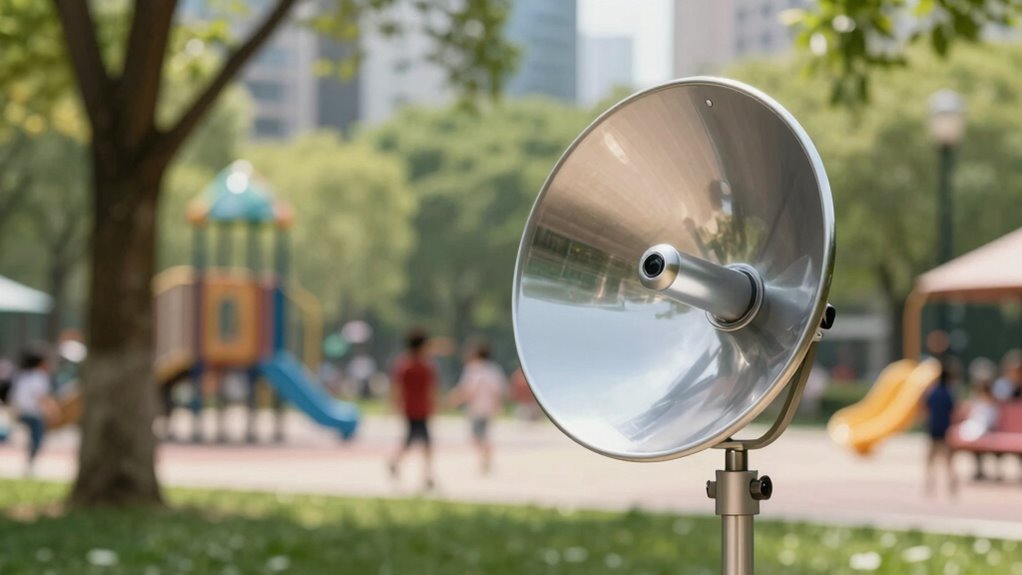

Parabolic microphones help when you need to catch distant sounds clearly, such as during wildlife observation, surveillance, or security. They work best in open environments and when you aim accurately at your sound source. However, they can mislead if used in cluttered areas with background noise or when your aim is off, causing false or unclear signals. Environmental factors and misinterpretation are risks, but understanding these limits can improve your success. Keep exploring to discover how to maximize their benefits and avoid pitfalls.
Key Takeaways
- Parabolic microphones help in open areas by effectively capturing distant sounds with minimal background noise.
- They are useful for wildlife observation, revealing subtle animal sounds that are otherwise hard to hear.
- Mislead when environmental noise, echoes, or cluttered surroundings obscure or distort the target audio.
- Incorrect aiming or movement of sound sources can reduce clarity and lead to misinterpretation of sounds.
- Overreliance without analyzing context can cause false conclusions due to amplified irrelevant or misleading noises.
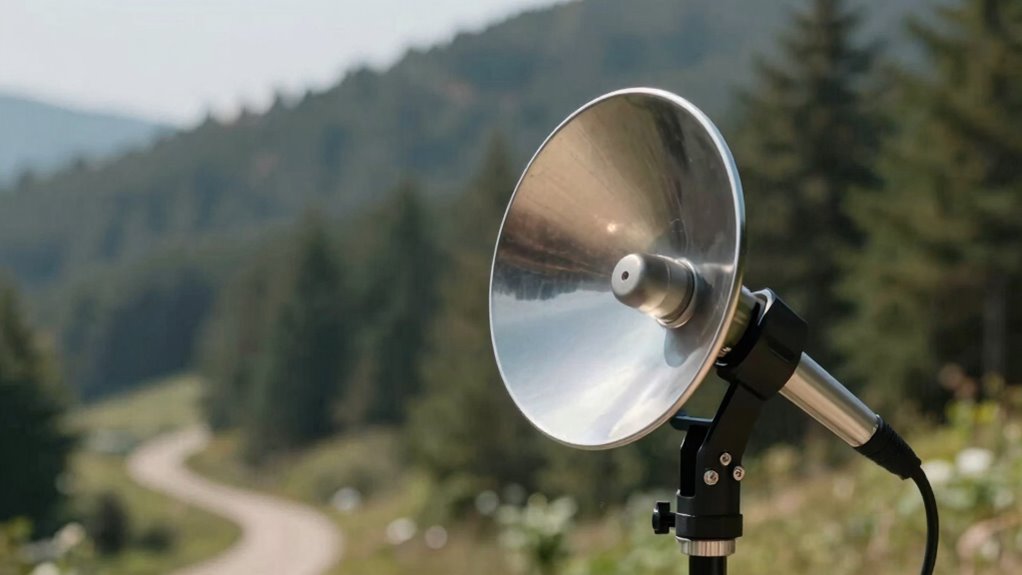
Have you ever wondered when a parabolic microphone can truly give you an edge and when it might just lead you astray? These devices are powerful tools that amplify distant sounds, making them invaluable in various situations. In wildlife observation, they let you eavesdrop on animals from afar without disturbing their natural behavior. When used correctly, they can reveal subtle sounds—like the rustling of leaves or a bird’s call—that might otherwise go unnoticed. Similarly, in surveillance techniques, parabolic microphones help law enforcement or security teams pick up conversations or noises from significant distances, providing critical intelligence without needing to be close.
Parabolic microphones enhance distant sounds, aiding wildlife observation and surveillance when used with care and proper technique.
However, it’s essential to understand their limitations. The effectiveness of a parabolic microphone depends heavily on the environment. In open spaces, they excel because sound waves travel more freely, allowing you to clearly hear what’s happening far away. But in cluttered areas—thick forests or urban settings—sound can bounce off objects or be obscured, reducing clarity. You might pick up background noise or echoes that make it difficult to isolate the specific sound you’re after. This can be particularly frustrating in wildlife observation, where environmental noise is already a challenge, or in surveillance, where clarity can be a matter of security.
Another consideration is the directionality of the microphone. Parabolic microphones are highly focused, so you need to aim precisely at the source of sound. If your aim is off or if the sound source moves, the audio quality drops sharply. This means you need steady hands and good positioning, especially when tracking fast-moving animals or subjects. Without proper technique, you risk collecting confusing or misleading audio that can lead you astray. Additionally, accurate aiming plays a crucial role in ensuring the clarity and relevance of the collected sound. It’s also important to consider the angle of detection, as even slight deviations can significantly impact the quality of the audio captured.
Moreover, while a parabolic microphone amplifies distant sounds, it doesn’t inherently distinguish between relevant and irrelevant noises. In wildlife observation, you might hear a squirrel in the distance but also pick up wind or other animals’ calls, which can muddy the soundscape. In surveillance, background chatter or environmental noise can mask the target audio. Relying solely on amplification without context or careful analysis can lead you to false assumptions.
Furthermore, environmental factors such as background noise and weather conditions can significantly impact the microphone’s performance, making it even more crucial to understand the limits of this tool. Ultimately, your success with a parabolic microphone hinges on understanding these nuances. It’s a tool that offers incredible advantages when used thoughtfully—helping you observe wildlife more closely or gather crucial intelligence from afar. But if you’re not cautious, environmental factors, aiming errors, or background noise can mislead you, making you think you’re hearing something important when it’s just clutter. To get the most out of it, combine its use with good technique, environmental awareness, and a clear understanding of its limits.

Professional Bird Watching Parabolic Microphone 8X Sound Amplifier Monocular for Outdoor Wildlife Observation Up to 650 Feet Range
【Function】Select the target range, then pull the to hear the amplified sound. No need to install a sim…
As an affiliate, we earn on qualifying purchases.
As an affiliate, we earn on qualifying purchases.
Frequently Asked Questions
How Do Parabolic Microphones Differ From Traditional Microphones?
Parabolic microphones differ from traditional microphones by providing sound amplification and a sharp directional focus. They use a parabolic dish to concentrate sound waves onto a receiver, allowing you to pick up distant sounds clearly. Unlike traditional microphones, which capture sound from all directions, parabolic mics focus on specific sources, making them ideal for listening over long distances or in noisy environments.
What Are the Best Environments for Using Parabolic Microphones?
You’ll find parabolic microphones work best in open environments like wildlife observation and sports broadcasting. They excel when you need to pick up distant sounds clearly, such as animal calls or a distant player’s voice. Use them outdoors, where sound can travel unobstructed, and avoid crowded or noisy areas. These microphones are ideal for capturing specific sounds from far away, helping you get detailed audio in situations where traditional microphones fall short.
Can Parabolic Microphones Pick up Sounds Through Walls?
Imagine a lighthouse trying to pierce through fog—parabolic microphones attempt wall penetration using sound amplification. While they excel at capturing distant sounds in open spaces, walls block and distort signals, making it difficult to hear through them. Thick barriers absorb or deflect sound waves, so you can’t reliably pick up sounds through walls with these devices. They’re more effective outdoors than in enclosed, soundproofed environments.
How Much Do Parabolic Microphones Typically Cost?
Parabolic microphones typically cost between $100 to $1,000, depending on the brand options and features. You’ll find budget-friendly choices from lesser-known brands, while high-end models offer superior sound clarity and durability. When considering the cost comparison, think about your needs—whether casual use or professional applications. Investing in a reputable brand guarantees better performance, but many affordable options still deliver good quality for most outdoor or surveillance needs.
Are There Legal Restrictions on Using Parabolic Microphones?
You should know that there are legal restrictions on using parabolic microphones, especially regarding privacy concerns and regulations. For example, recording conversations in private spaces without consent can lead to legal trouble. Laws vary by jurisdiction, so it’s essential to verify local regulations before deploying these devices. Using them responsibly helps avoid violating privacy rights and ensures you stay within legal boundaries.
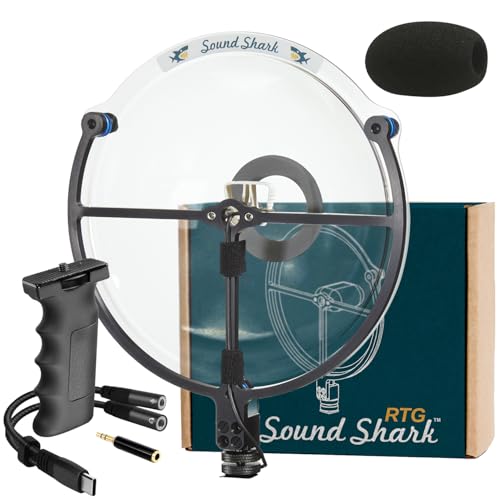
SOUND SHARK Parabolic Directional Microphone (3.5mm TRRS + USB-C Bundle) Professional External Long Range Recording, DSLR Camera, & Smartphone Mic for Birding, Listening, and Shotgun Boom Alternative
TURN DISTANT ACTION INTO CRYSTAL-CLEAR SOUND: Sound Shark Directional Microphone is designed to capture precious moments, even when…
As an affiliate, we earn on qualifying purchases.
As an affiliate, we earn on qualifying purchases.
Conclusion
Think of a parabolic microphone as a trusty lighthouse beacon. It guides you through the fog, helping you find distant sounds, but beware—sometimes it shines too brightly, revealing things best left unseen. Like a lighthouse’s beam, it’s invaluable when used wisely, yet misleading if relied on blindly. Know its limits, and you’ll navigate the sounds of the world with confidence, avoiding the rocks of false clues and steering toward clarity.
SOUND SHARK Parabolic Directional Microphone (3.5mm TRRS + USB-C Bundle) Professional External Long Range Recording, DSLR Camera, & Smartphone Mic for Birding, Listening, and Shotgun Boom Alternative
TURN DISTANT ACTION INTO CRYSTAL-CLEAR SOUND: Sound Shark Directional Microphone is designed to capture precious moments, even when…
As an affiliate, we earn on qualifying purchases.
As an affiliate, we earn on qualifying purchases.
SOUND SHARK Parabolic Directional Microphone (3.5mm TRRS + USB-C Bundle) Professional External Long Range Recording, DSLR Camera, & Smartphone Mic for Birding, Listening, and Shotgun Boom Alternative
TURN DISTANT ACTION INTO CRYSTAL-CLEAR SOUND: Sound Shark Directional Microphone is designed to capture precious moments, even when…
As an affiliate, we earn on qualifying purchases.
As an affiliate, we earn on qualifying purchases.