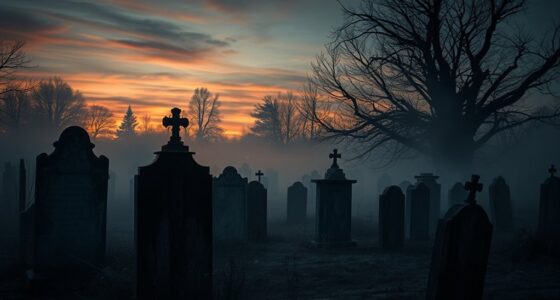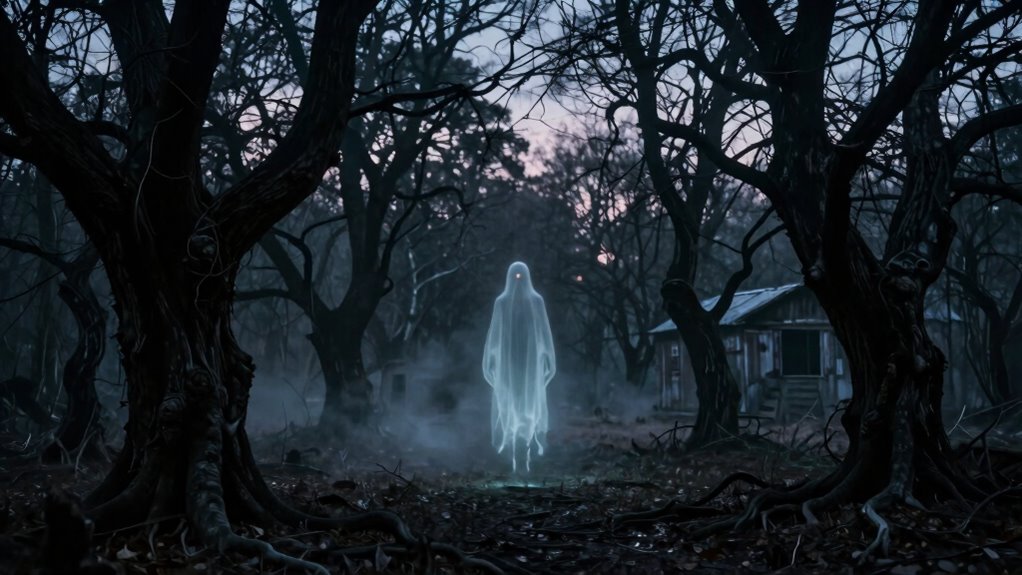

Many people misuse terms like “haunted location” by blaming flickering lights or noises, when true hauntings involve persistent psychic activity like apparitions or cold spots. “Psychic phenomena” is often used as a catch-all for any strange event, but real psychic experiences follow patterns and can sometimes be tested. Oversimplifying or mislabeling these phenomena leads to skepticism and confusion. Keep exploring to uncover how to recognize genuine paranormal activity from ordinary explanations.

Get movie nights delivered free with Prime
- Fast, free delivery on millions of items
- Prime Video, Amazon Music and more included
- Member-only deals all year
Key Takeaways
- “Haunted Location” is often misused to describe minor phenomena like flickering lights instead of genuine psychic activity.
- “Psychic Phenomena” is frequently used as a catch-all for any odd occurrence, ignoring specific, testable phenomena like telepathy or precognition.
- The term “haunted” is overgeneralized in pop culture, often linked to natural causes without scientific validation.
- People often confuse ordinary explanations, such as drafts or electrical issues, with authentic paranormal activity.
- Differentiating between superficial phenomena and genuine psychic events is crucial but often overlooked in popular discussions.
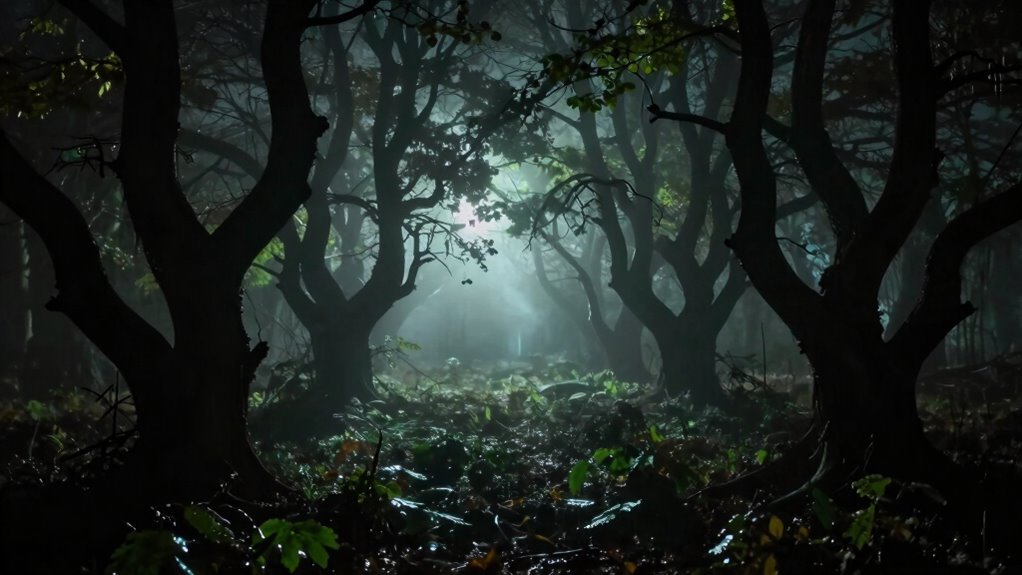
Have you ever noticed how often people misuse paranormal terms? It’s common to hear someone claim they’ve experienced a “haunted location” just because they saw a flickering light or heard a strange noise. But a true haunted location involves more than just odd sounds or fleeting shadows. It’s a place where genuine psychic phenomena—such as unexplained apparitions, cold spots, or objects moving on their own—frequently occur and seem to be tied to residual energy or unresolved spirits. Many folks toss around “haunted” without understanding the difference between genuine paranormal activity and simple misinterpretations. This confusion dilutes the significance of real haunted locations, where some of the most compelling psychic phenomena are reported.
People often misuse “psychic phenomena” as a catch-all term for any odd occurrence. They might say they experienced a “psychic event” because they had a strange feeling or saw a fleeting image, but these are not always clear signs of psychic phenomena. True psychic phenomena involve specific, measurable manifestations like telepathy, clairvoyance, or precognition. When these phenomena happen, they tend to follow certain patterns and can sometimes be tested or observed more systematically. Unfortunately, many dismiss these experiences as coincidence or imagination, leading to a misunderstanding of what psychic phenomena actually are. Recognizing the specific manifestations associated with psychic phenomena can help clarify their distinction from ordinary occurrences. Additionally, understanding the scientific basis for some psychic phenomena can help differentiate between genuine cases and misinterpretations. Many researchers emphasize the importance of empirical evidence when studying these phenomena to distinguish between real cases and illusions.
Furthermore, terms like “haunted” are often applied loosely in pop culture, turning locations into ghostly attractions without scientific backing. When people label a building as haunted, they might ignore the nuanced differences between natural causes—such as drafts or electrical issues—and the extraordinary psychic phenomena that truly define paranormal activity. This oversimplification can lead to skepticism, as the public begins to see all claims as exaggerated or fake. It’s important to recognize that authentic haunted locations are characterized by consistent, unexplained psychic phenomena that persist over time, not just eerie sounds or shadows that could have mundane explanations. Recognizing what constitutes genuine paranormal activity is essential for maintaining credibility and understanding the true nature of these phenomena. Additionally, understanding the psychological factors behind reports can help clarify why many experiences are misinterpreted or exaggerated.
In essence, the misuse of paranormal terms like “haunted locations” and “psychic phenomena” hampers understanding. It’s easy to fall into the trap of sensationalism, but true paranormal activity involves specific, often verifiable, phenomena. When you learn to differentiate between the superficial and the genuine, you gain a deeper appreciation for the mysteries that still surround us. Recognizing these distinctions helps keep the conversation grounded in reality while respecting the intriguing phenomena that continue to fascinate many.
As an affiliate, we earn on qualifying purchases.
Frequently Asked Questions
How Do I Identify Genuine Paranormal Activity?
To identify genuine paranormal activity, stay skeptical and look for consistent, unexplained phenomena that defy natural explanations. Paranormal skeptics advise documenting your experiences thoroughly and gathering evidence carefully. Always prioritize evidence validation, such as ruling out environmental factors or hoaxes. Genuine activity often persists despite rational investigation, so trust your intuition but verify with logical analysis. If the phenomenon remains unexplained after thorough checks, it could be authentic paranormal activity.
Are All Ghost Sightings Scientifically Proven?
You’ll be surprised to learn that over 45% of people believe in ghost sightings, yet none are scientifically proven. When it comes to paranormal terminology and ghostly language, most claims lack empirical evidence. While many report eerie encounters, scientific studies haven’t validated these experiences. So, you should approach ghost sightings with skepticism, understanding that they’re often influenced by perception and folklore rather than concrete proof.
What’s the Difference Between a Spirit and a Demon?
A spirit is generally considered a benign or neutral entity representing a deceased person’s essence or spiritual energy. In contrast, a demon is seen as an evil entity or malevolent spiritual energy, often associated with evil entities or malevolent intentions. The key difference lies in their intent and nature: spirits can be helpful or neutral, while demons are linked to evil and harm. Recognizing this helps you understand their roles in paranormal beliefs.
Can Paranormal Terms Be Used Interchangeably?
Paranormal terms can’t be used interchangeably because of terminology confusion and misinterpretation of terms. You might hear someone call a ghost a demon or vice versa, but these are different entities with distinct traits. Using terms inaccurately can lead to misunderstandings about paranormal phenomena. To avoid confusion, it’s important to learn the specific meanings behind each term, ensuring clear communication and a better grasp of the paranormal world.
Why Do People Believe in Paranormal Phenomena?
You believe in paranormal phenomena because your belief psychology is influenced by personal experiences, cultural stories, and media portrayals that reinforce these ideas. You might find comfort or excitement in supernatural explanations, even when scientific paranormal terminology offers skepticism. Your mind seeks patterns and meaning, which makes you more receptive to believing in things beyond scientific understanding, shaping your perception of unexplained events and fueling ongoing fascination with the paranormal.
cold spot detector for paranormal investigation
As an affiliate, we earn on qualifying purchases.
As an affiliate, we earn on qualifying purchases.
Conclusion
Now that you know which paranormal terms are often misused, you can see through the fog of confusion. Like a flashlight piercing the night, understanding these words brightens your grasp of the supernatural. Don’t let misconceptions haunt your knowledge—embrace clarity and curiosity. After all, the true mystery isn’t in the terms, but in your journey to unravel the unknown. Keep questioning, keep exploring, and let your mind wander where the shadows dare to go.
As an affiliate, we earn on qualifying purchases.
As an affiliate, we earn on qualifying purchases.
Halloween Picks
halloween
As an affiliate, we earn on qualifying purchases.