
Having accurate baseline measurements before starting an investigation is essential because they set the foundation for trustworthy analysis. Proper calibration ensures your sensors provide consistent, reliable data, helping you identify real issues and avoid false alarms. Inaccurate initial data can lead to misinterpretation, missed problems, or unnecessary troubleshooting. By establishing solid baseline conditions, you’ll make better decisions and monitor system performance more effectively. Keep reading to discover how to optimize your setup from the start.
Key Takeaways
- Accurate baseline readings establish a trustworthy reference for identifying deviations during investigation.
- Proper calibration ensures sensor data is reliable, preventing misleading results.
- Initial measurements help distinguish between normal variations and actual issues.
- Reliable baselines improve decision-making and reduce false alarms.
- Consistent baseline data supports effective troubleshooting and long-term system monitoring.
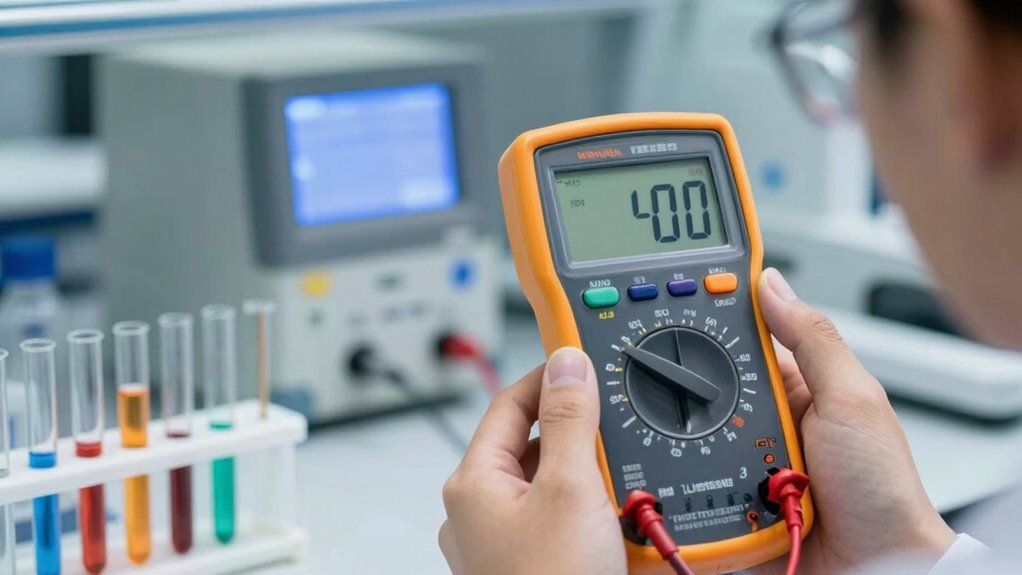
Before diving into investigations, establishing accurate baseline readings is essential. When you start any measurement or diagnostic process, the quality of your data hinges on the initial readings. This initial step is crucial for sensor calibration, which ensures your measurements are trustworthy. Properly calibrated sensors ensure that the data you collect reflects the true state of the system you’re examining. Without this step, all subsequent measurements could be misleading, leading to incorrect conclusions or missed issues. sensor calibration aligns the sensor’s output with known standards, which helps you achieve reliable, repeatable results. When your sensors are correctly calibrated, you gain confidence in your baseline data, making it easier to detect anomalies or changes during the investigation. Ensuring measurement accuracy from the beginning establishes the foundation for trustworthy analysis. Data accuracy is the foundation of effective analysis. When your baseline readings are precise, you set a clear reference point for all future measurements. This allows you to distinguish between normal variations and potential problems. If your initial data is flawed or inconsistent, it becomes difficult to interpret subsequent readings accurately. Inaccurate baseline data can cause you to overlook critical issues or chase false alarms, wasting valuable time and resources. Consequently, investing time in obtaining accurate baseline readings ensures that your investigation is based on solid, trustworthy information. Additionally, understanding the importance of contrast ratio can help you better interpret variations in image quality, especially in dark scenes. Starting with accurate baseline readings also minimizes the risk of misdiagnosis. When you have a clear, precise understanding of the system’s normal state, you can identify deviations more readily. This is especially important in complex systems where small changes might have significant implications. Establishing a reliable baseline also involves consistent sensor calibration, which supports ongoing data integrity. By establishing a reliable baseline, you create a benchmark that helps you monitor ongoing performance or detect early signs of failure. Additionally, accurate baseline data supports better decision-making, enabling you to prioritize maintenance or remediation efforts effectively. In the context of projectors, factors like color accuracy and contrast ratio directly influence viewer experience, making initial calibrations crucial. Moreover, measurement consistency over time is essential for tracking progress and ensuring data reliability. This ongoing comparison depends heavily on the initial accuracy of your baseline readings. Ultimately, the effort you put into setting a precise and reliable baseline pays off by providing clarity, reducing uncertainties, and guiding your investigative steps with confidence.

ADAS Radar Corner Reflector Kit with 0-30 Centimeter Scale Stand
- Universal Vehicle Compatibility: Fits Honda, Toyota, Kia, Ford
- ADAS Calibration Enhancement: Improves safety and system performance
- Durable Construction: Conical metal trihedron reflector
As an affiliate, we earn on qualifying purchases.
As an affiliate, we earn on qualifying purchases.
Frequently Asked Questions
How Often Should Baseline Readings Be Taken?
You should take baseline readings regularly, typically daily or weekly, depending on the measurement frequency needed for your specific situation. Consistent data collection guarantees data consistency, making it easier to identify trends and anomalies. By maintaining a steady measurement frequency, you’ll gather reliable baseline data that forms a solid foundation for your investigation, helping you make informed decisions and accurately assess any changes or issues over time.
Can Baseline Readings Predict Future System Failures?
Baseline readings alone can’t definitively predict future system failures, but they’re essential for effective system monitoring and predictive analytics. By comparing current data to your baseline, you can identify anomalies early, helping you anticipate potential issues. Regular baseline assessments enhance your ability to spot trends and vulnerabilities, enabling proactive maintenance and reducing downtime. So, while not a crystal ball, baseline readings are key tools in your predictive analytics toolkit.
What Tools Are Best for Accurate Baseline Measurements?
Think of setting a foundation before building—using the right tools guarantees accuracy. For precise baseline measurements, you need sensors that are well-calibrated and maintain data consistency. Tools like high-quality digital multimeters, temperature sensors, and pressure gauges with calibration features are best. Regular sensor calibration guarantees reliable data, helping you spot anomalies early. Trusting reliable tools means your baseline readings truly reflect system health, preventing false alarms or missed failures.
How Do Environmental Factors Affect Baseline Readings?
Environmental variations and external influences can considerably impact your baseline readings. Changes in temperature, humidity, or air quality may cause fluctuations, making your measurements less reliable. You need to account for these factors by conducting tests in stable conditions, minimizing external influences, and documenting environmental settings. This guarantees your baseline data accurately reflects normal conditions, providing a trustworthy foundation for your investigation and helping to detect true anomalies later.
Who Is Responsible for Recording Baseline Data?
You are responsible for recording baseline data, guaranteeing sensor calibration is precise to capture accurate readings. Picture yourself as the guardian of data consistency, like a steady lighthouse guiding investigations through foggy conditions. Your careful measurements set the standard, helping detect changes later. By maintaining consistent procedures and double-checking sensor calibration, you guarantee the baseline readings remain reliable, serving as a solid foundation for all subsequent environmental assessments.
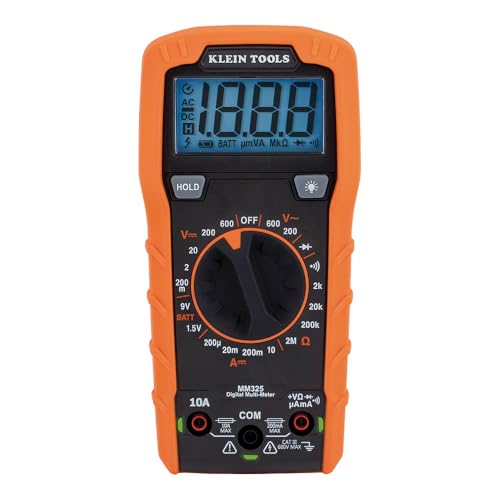
Klein Tools MM325 Multimeter, Digital Manual-Ranging 600V AC/DC Voltage Tester, Tests Batteries, Current, Resistance, Diodes, and Continuity
- Voltage Measurement: AC/DC up to 600V
- Current Testing: Up to 10A DC
- Resistance Testing: Measures up to 2MΩ
As an affiliate, we earn on qualifying purchases.
As an affiliate, we earn on qualifying purchases.
Conclusion
Think of baseline readings as the compass guiding your investigation; without them, you’re sailing blind. They provide a clear map of what’s normal, helping you spot anomalies with confidence. Skipping this step is like starting a journey without a destination—you’re more likely to get lost in the details. So, before diving deep, set your foundation right. It’s the anchor that keeps your investigation grounded and guarantees you find the truth beneath the surface.

Baseline – W54668 AcuAngle Inclinometer with Adjustable-Feet for Precision Measurement, Testing and Evaluation of Range of Motion of Neck, Hip, Spine, Elbow, Knee, Shoulder, Ankle, Wrist and MCP Joint
- Easy Range of Motion Measurement: Displays degrees directly on dial
- Adjustable Legs for Stability: Adapts to various body contours
- Multiple Joint Measurements: Measures flexion, extension, and more
As an affiliate, we earn on qualifying purchases.
As an affiliate, we earn on qualifying purchases.

MSA 10110488 Altair 4X Multigas Detector & Calibration Kit
- Easy Operation: Large buttons and bright display
- MotionAlert Safety: Activates after 30 seconds of inactivity
- InstantAlert Alarm: Manual danger alert with a button
As an affiliate, we earn on qualifying purchases.
As an affiliate, we earn on qualifying purchases.