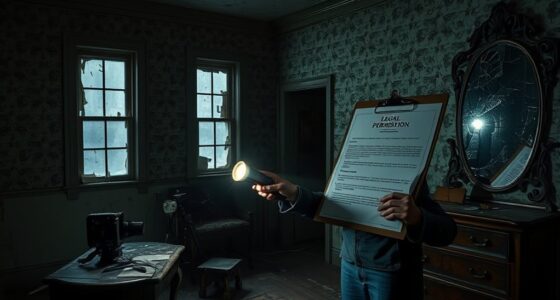
To tell a good ghost story without inventing evidence, focus on genuine, relatable details that build authenticity. Use subtle sounds like creaking floorboards, faint whispers, or flickering lights to evoke atmosphere. Describe sights and sensations vividly—cold spots, uneasy feelings, or unusual shadows—without exaggeration. Slow, deliberate pacing heightens suspense, and sensory details make the experience feel real. Keep your story grounded in reality, and if you keep exploring, you’ll uncover even more ways to make it convincing.

Get movie nights delivered free with Prime
- Fast, free delivery on millions of items
- Prime Video, Amazon Music and more included
- Member-only deals all year
Key Takeaways
- Focus on authentic, subtle details like creaking floors or flickering lights to create a believable atmosphere.
- Use realistic, plausible descriptions rooted in genuine experiences to maintain credibility.
- Build suspense gradually through sensory descriptions and careful pacing to enhance the story’s authenticity.
- Incorporate factual or historical context to support the story’s realism and deepen engagement.
- Employ audio and visual aids carefully to evoke atmosphere without over-exaggerating supernatural elements.

Telling a good ghost story isn’t just about spooking your audience; it’s about capturing their imagination and keeping them hooked from start to finish. To do that, you need to focus on paranormal accuracy and storytelling techniques that lend authenticity to your tale. When your story feels genuine, listeners are more likely to believe and become immersed in the experience. The key is to craft a narrative rooted in real or plausible details, avoiding over-the-top embellishments that can break the illusion. Use subtle descriptions and specific details—like the creak of an old floorboard or the flicker of a candle—to make the story feel tangible.
Your storytelling techniques should emphasize pacing and atmosphere. Build suspense gradually and use pauses effectively to heighten tension. You can create a sense of dread by describing eerie sights and sounds with precision, making your listeners feel as if they’re right there with you. Incorporate sensory details—what you saw, heard, or felt—to deepen the realism. When you describe a chilling encounter, focus on small, convincing elements instead of grand, unbelievable claims. This approach enhances paranormal accuracy and keeps your audience engaged without resorting to false evidence. Additionally, understanding the importance of content formats can help you present your story in a way that resonates more deeply with your listeners. Using visual aids or audio effects can also elevate the storytelling experience, making the supernatural elements more vivid and believable. Incorporating storytelling techniques rooted in authenticity and emphasizing factual details ensures your narrative remains compelling and credible.
Popular right now

Bose QuietComfort Ultra Wireless Noise-Cancelling Headphones with Spatial Audio, Black

Bose QuietComfort Headphones (2nd Gen), Wireless Noise-Cancelling Over-Ear Headphones, Black

Shark Rotator Lift-Away Vacuum with DuoClean PowerFins (LA555) – Dark Grey
As an affiliate, we earn on qualifying purchases.
Frequently Asked Questions
Can You Use Real People’s Stories Without Their Permission?
You shouldn’t use real people’s stories without their permission because it raises privacy concerns and ethical storytelling issues. When sharing personal experiences, always seek consent to respect their privacy and avoid potential harm. If you can’t get permission, consider anonymizing details or creating fictionalized accounts inspired by true events. This way, you maintain integrity in your storytelling while respecting individuals’ rights and avoiding ethical pitfalls.
How Do You Ensure the Story Is Respectful to All Parties?
To guarantee your ghost story remains respectful to all parties, practice cultural sensitivity and ethical storytelling. You should obtain permission if possible, or change details to protect privacy. Be mindful of cultural beliefs and avoid stereotypes that could offend. Focus on sharing the story with empathy and respect, emphasizing the human experience rather than sensationalism. This approach helps honor those involved and maintains integrity in your storytelling.
What Are Common Pitfalls When Telling Ghost Stories?
When telling ghost stories, common pitfalls include undermining credibility concerns with exaggerated details or inconsistent storytelling techniques. You might lose your audience if the story feels fabricated or unconvincing. To avoid this, focus on creating a believable narrative, maintain a steady tone, and use authentic details. Keep your storytelling techniques engaging but grounded, ensuring your listeners stay captivated without questioning the story’s authenticity.
How Much Detail Is Too Much in a Ghost Story?
You should include enough detail to create a vivid atmosphere without overwhelming your audience. Focus on supernatural accuracy by emphasizing authentic-sounding details that support the story’s credibility. Use storytelling techniques like building suspense and sensory descriptions, but avoid overloading with minutiae. Too much detail can distract or bore your listeners, so strike a balance that keeps them engaged and immersed in the eerie experience you’re sharing.
Should You Include Personal Beliefs When Recounting a Ghost Story?
Think of your ghost story as a bridge—personal beliefs can add authentic weight, boosting supernatural credibility. If you share your genuine experiences, skeptics might cross over, feeling the story’s truth. But if your personal skepticism is strong, it can weaken the connection, making listeners doubt. Balance honesty with intrigue, revealing enough of your beliefs to captivate without overwhelming, and your story becomes a compelling passage into the unknown.
Conclusion
Now that you know how to craft a ghost story without fabricating evidence, you’re ready to send shivers down your audience’s spines. Keep your stories grounded in believable details, much like a sturdy foundation supports a tall, spooky tower. Use vivid descriptions and a touch of suspense to keep listeners hooked. With practice, your tales will be as enthralling as a flickering lantern in the dark—illuminating minds without needing to invent ghostly proofs.