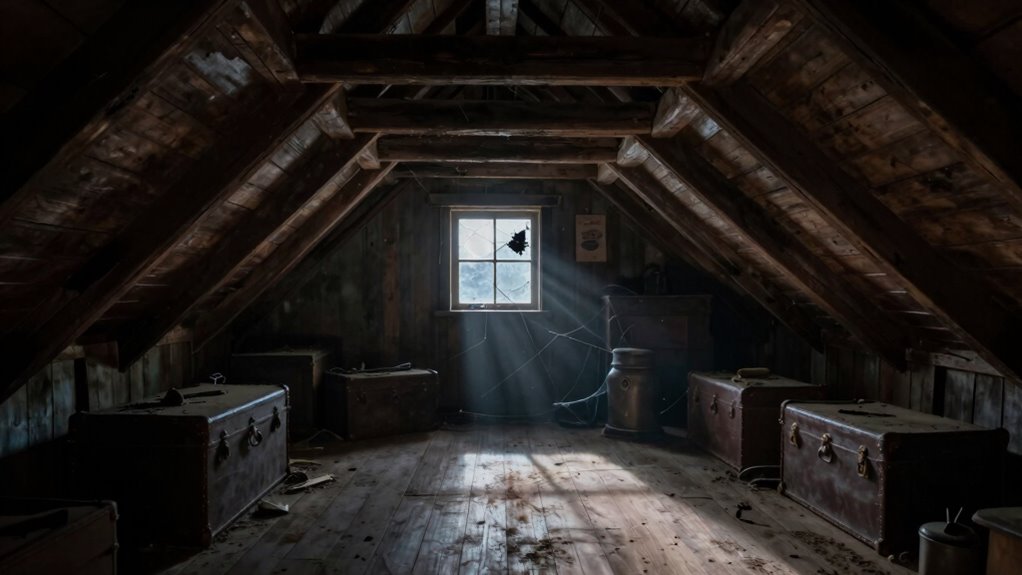
Attics feel more haunted than living rooms because they’re often neglected and filled with clutter, creating dark, eerie shadows that spark your imagination. Dust and decay deposit an unsettling atmosphere, while broken windows and sagging beams deepen the sense of abandonment. Poor ventilation traps stale air, making the space feel oppressive. Shadows, creaking sounds, and silence amplify primal fears of the unknown. If you explore further, you’ll uncover how these eerie details contribute to the haunted vibe even more.
Key Takeaways
- Attics typically accumulate more dust and clutter, creating a neglected, eerie atmosphere.
- Poor ventilation in attics traps stale, musty air, intensifying discomfort and haunting impressions.
- Visual cues like peeling paint and broken beams reinforce a long-standing abandonment feel.
- Shadows and creaking sounds in attics heighten the sense of mystery and fear.
- Attics symbolize forgotten spaces, triggering primal fears of decay, the unknown, and intrusion.
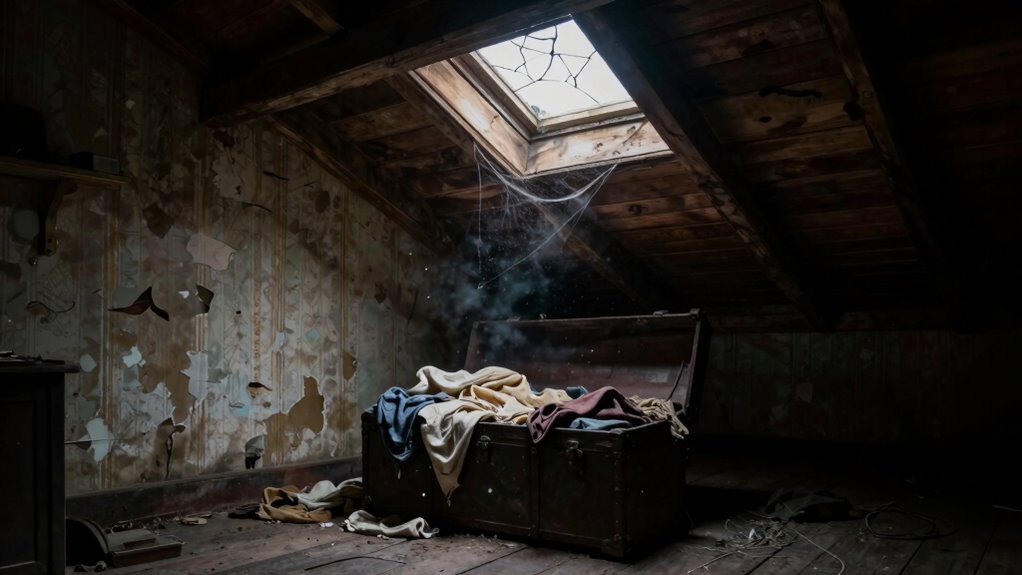
Many people find that attics feel more haunted than living rooms, and it’s not just a matter of superstition. The atmosphere in these spaces often seems thick with unease, and it’s easy to wonder why. One reason is dust accumulation. Over time, dust gathers in attics, settling on every surface, creating a thick, gritty layer that seems almost alive. It’s a visual cue that no one has been here in a long time, which feeds into the haunted vibe. Additionally, dust can influence the air quality, making the environment feel more oppressive and unsettling. Poor ventilation in attics can exacerbate this effect, trapping stale air and increasing discomfort. Proper air circulation can significantly improve the atmosphere, but many attics lack adequate airflow, heightening the sense of decay.
Another factor is storage clutter. Attics are often used as catch-alls for items you no longer need but can’t part with. Boxes of old clothes, broken furniture, forgotten memorabilia—all piled haphazardly—contribute to a chaotic environment. This clutter blocks light and makes the space feel confined and unwelcoming. When you look around at a jumble of items, it’s easy to imagine stories trapped in those objects—stories that are better left untouched. The clutter also makes it difficult to navigate, heightening feelings of unease. You might feel like you’re intruding on a space that’s been sealed off from the outside world, a place where time stands still and things are best left undisturbed.
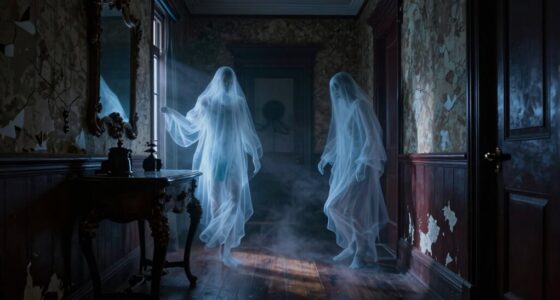
Another aspect that amplifies this haunted feeling is the visual cues of neglect, such as peeling paint, broken windows, or sagging beams, which reinforce the sense that the space has been abandoned for a long time. The combination of dust and clutter creates an atmosphere of neglect that many interpret as haunted. Shadows cast by uneven light, the creaking of old beams, and the faint smell of musty air only reinforce that impression. When you step into an attic, you’re stepping into a space that’s been largely ignored, left to its own devices. The silence, broken only by your footsteps or the settling of old wood, makes your mind fill in the gaps with ghostly stories. It’s no surprise that attics have become the setting for many ghost stories and horror tales—these spaces tap into primal fears of decay, the unknown, and forgotten memories. All these elements combine to make attics feel more haunted than your living room, where comfort and familiarity reign.
attic ventilation fan
As an affiliate, we earn on qualifying purchases.
As an affiliate, we earn on qualifying purchases.
Frequently Asked Questions
Do Attics Actually Have More Ghosts Than Living Rooms?
Yes, attics often seem more haunted than living rooms because they harbor more creaks, unexplained noises, and shadows, which can be amplified by poor attic venting and insulation quality. These factors create a mysterious atmosphere, making you more aware of sounds and movements. The lack of regular use and maintenance can also cause a buildup of drafts and cold spots, heightening the spooky vibe and making ghosts feel more present in the attic.
How Do Attic Spaces Influence Paranormal Activity Perceptions?
Attic spaces influence paranormal activity perceptions because many believe that 60% of haunted house stories originate from these areas. Urban legends often reinforce this idea, suggesting attics harbor spirits or dark energies. Psychologically, the confined, dim atmosphere of attics heightens fear and imagination, making you more susceptible to sensing unseen presences. This combination of folklore and environment amplifies the haunted feeling, even if no actual supernatural activity exists.
Are Attics More Haunted Because of Their History?
Yes, attics often feel more haunted because of their history and architectural features. Their historical significance, such as old belongings or stories of past inhabitants, fuels the eerie atmosphere. Architectural features like creaky beams, narrow spaces, and hidden corners create a spooky ambiance that heightens paranormal perceptions. These elements make attics seem more mysterious and haunted, especially since they often hold secrets from the past that linger in the shadows.
Can Attic Insulation Affect Ghost Sightings?
Yes, attic insulation can affect ghost sightings, believe it or not. Poor insulation materials may cause temperature fluctuations and creaky sounds, making the space feel more haunted. When you upgrade insulation for better energy efficiency, you reduce these eerie noises and drafts. This creates a more comfortable, less spooky environment, possibly decreasing your chances of sensing ghostly presence. So, good insulation might just make your attic less haunted!
Why Do People Feel Uneasy in Attic Spaces?
You feel uneasy in attic spaces because cultural beliefs often associate these areas with ghostly activity, heightening your fears. Psychological effects, like the darkness and isolation, amplify your sense of vulnerability. Attics are less familiar and more secluded, making your mind imagine supernatural presence. These factors combine, creating an unsettling atmosphere that triggers your subconscious fears, making attics seem more haunted than other parts of your home.
attic storage organization bins
As an affiliate, we earn on qualifying purchases.
As an affiliate, we earn on qualifying purchases.
Conclusion
So, next time you climb into your attic, remember it’s like stepping into a shadowed forest—full of secrets and whispers lurking in the darkness. The creaks, the unknown corners, and the lingering silence all combine to make it feel haunted. Yet, it’s simply a place where memories and mystery intertwine. Embrace the curiosity, and you might just find that what feels haunted is really just a story waiting to be uncovered beneath the dust.
dust removal vacuum for attics
As an affiliate, we earn on qualifying purchases.
As an affiliate, we earn on qualifying purchases.
attic lighting fixtures
As an affiliate, we earn on qualifying purchases.
As an affiliate, we earn on qualifying purchases.