For a smart leak detector for frozen pipes, I’d start with the X-Sense 2-in-1 Wi-Fi Water Leak and Freeze Detector for direct leak and low-temperature alerts without a separate hub. The YoLink Water Leak Sensor 1 Kit is a standout for homes where sensors need to reach far from the router, while the Frizzlife LP365 adds whole-home monitoring and automatic shutoff for a higher-commitment setup. The main tradeoffs are whether you need a freeze warning or just water detection, how reliable the connection is in basements and utility rooms, and whether you want a point sensor or a valve that can stop water flow. I compare all 15 options by those practical differences, including setup, coverage, and the role of temperature alerts. Read on for the full breakdown and help choosing the right protection for your home.

Get movie nights delivered free with Prime
- Fast, free delivery on millions of items
- Prime Video, Amazon Music and more included
- Member-only deals all year
Key Takeaways
- Freeze sensing is not universal: several options combine water detection with temperature alerts, but buyers should verify that a model specifically reports low temperatures rather than assuming every leak sensor detects freezing conditions.
- Whole-home shutoff changes the protection level: the Frizzlife LP365 and Moen Flo can monitor or stop water flow, while standalone sensors alert you to water at their placement points but cannot close a pipe valve.
- Connectivity matters in cold, tucked-away spaces: YoLink’s hub-based system is a stronger fit for remote or difficult-to-reach sensor locations than a Wi-Fi-only device that depends on a steady signal at the sensor.
- More sensors can beat a more elaborate single device: multi-sensor kits from X-Sense, YoLink, and GoveeLife can cover several likely leak points, but placement and alert routing still need planning.
- Automatic shutoff brings added tradeoffs: a valve system can limit damage when nobody is home, but installation, pipe sizing, and tolerance for automated water control matter more than they do with simple alarms.
| YoLink Water Leak Sensor 1 Kit: 4-Pack + Hub | 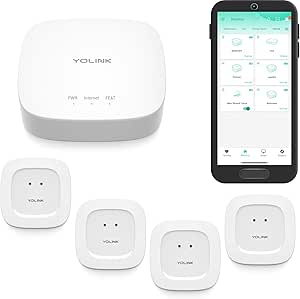 | Best for Whole-Home Coverage | Included sensors: 4 | Hub included: Yes | Connectivity: Wireless LoRa | VIEW ON AMAZON | See Our Full Breakdown |
| Frizzlife LPG365 Smart Water Auto Shutoff Valve with Leak Sensors |  | Best for Automatic Water Shutoff | Detection: Ultrasonic sensor and wireless leak sensors | Automatic shutoff: Yes | Control methods: App, push button, remote, and touch | VIEW ON AMAZON | See Our Full Breakdown |
| X-Sense 2-in-1 Wi-Fi Water Leak and Freeze Detector, No Hub |  | Best Standalone Freeze-and-Leak Pick | Detection: Water leak and temperature | Freeze alert threshold: Below 39°F (4°C) | Water sensitivity: As small as 0.4 mm | VIEW ON AMAZON | See Our Full Breakdown |
| eufy Security Flood & Freeze Sensor E20, Water Leak Detector & Freeze Alarm |  | Best for Existing eufy HomeBase Owners | Detection: Water leak and freezing temperature | Compatible hubs: HomeBase 2, 3, Mini, and Pro | Maximum range: 656 feet | VIEW ON AMAZON | See Our Full Breakdown |
| X-Sense Wi-Fi Water Leak Detector Kit, 120 dB, 3 Sensors + Base | 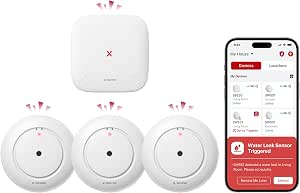 | Best Multi-Spot Leak Coverage | Number of sensors: 3 | Base station: Included | Detection probes: 6 per sensor: 2 upper and 4 bottom | VIEW ON AMAZON | See Our Full Breakdown |
| Resideo CHW3610W8001 WiFi Water Leak Detector for Home, Smart Water Sensor Alarm and Freeze Detector |  | Best for Extended Sensor Coverage | Power: 2 AA batteries, included | Connectivity: Wi-Fi | Control: App | VIEW ON AMAZON | See Our Full Breakdown |
| Kidde WiFi Water Leak Detector & Freeze Alarm, Alexa Compatible, Smart Leak Detector with App Alerts |  | Best for Smart-Home Voice Compatibility | Model: 60WLDR-W | Connectivity: Wi-Fi, Alexa, Google Home, iOS, and Android | Power: 2 AA batteries, included | VIEW ON AMAZON | See Our Full Breakdown |
| Moen 900-006 Flo Smart Water Monitor and Shutoff Sensor, Wi-Fi Connected Leak Detector for 1-Inch Pipe |  | Best for Automatic Whole-Home Shutoff | Model: 900-006 | Pipe compatibility: 1 to 1¼ inches | Power: AC 12V | VIEW ON AMAZON | See Our Full Breakdown |
| Frizzlife LP365 Smart Water Monitor and Automatic Shutoff Valve |  | Best for Fine-Grained Flow Monitoring | Detection threshold: Flow changes down to 0.01 GPM | Sensor technology: Ultrasonic | Pipe connections: ¾-inch and 1-inch | VIEW ON AMAZON | See Our Full Breakdown |
| X-Sense Wi-Fi Water Leak Detector & Freeze Alarm, No Hub Required, 1-Pack |  | Best for Simple, Loud Local Alerts | Connectivity: 2.4 GHz Wi-Fi; no hub required | Power: Battery powered; one battery listed | Battery life: Up to 2 years | VIEW ON AMAZON | See Our Full Breakdown |
| Ring Flood & Freeze Sensor |  | Best for Sidewalk Homes | Connectivity: Amazon Sidewalk | Detection: Water leaks and freezing temperatures | Power: 2 included AA alkaline batteries | VIEW ON AMAZON | See Our Full Breakdown |
| YoLink Water Leak Sensor 4 with 105dB Alarm Kit: 3-Pack + Hub |  | Best for Long-Range Coverage | Kit contents: 3 sensors and hub | Connectivity protocol: LoRa | Maximum range: 1000 feet listed; description claims up to 2034 feet | VIEW ON AMAZON | See Our Full Breakdown |
| SwitchBot WiFi Water Sensor |  | Best Hub-Free Wi-Fi Pick | Connectivity: 2.4GHz Wi-Fi | Hub requirement: No hub required | Detection: Water leaks | VIEW ON AMAZON | See Our Full Breakdown |
| GoveeLife Upgraded Smart Water Leak Detector 1s – 5 Pack |  | Best for Whole-Home Leak Coverage | Pack size: 5 detectors | Connectivity range: Up to 1804 feet | Alarm volume: Up to 105dB | VIEW ON AMAZON | See Our Full Breakdown |
| Aqara Water Leak Sensor 3 Pack, Zigbee Water Leak Detector for Alarm System |  | Best for Existing Aqara Setups | Pack size: 3 sensors | Connectivity: Zigbee | Hub requirement: Aqara Hub required for full functionality | VIEW ON AMAZON | See Our Full Breakdown |
| smart leak detector for frozen pipe | Power | Dimensions | Connectivity |
|---|---|---|---|
| YoLink Water Leak Sensor 1 Kit | — | — | Wireless LoRa |
| Frizzlife LPG365 Smart Water A | Corded electric and rechargeable lithium-ion battery | — | — |
| X-Sense 2-in-1 Wi-Fi Water Lea | — | 3.23 × 1.23 inches | Direct 2.4 GHz Wi-Fi; no hub |
| eufy Security Flood & Freeze S | — | 3.4 × 3.2 × 2.3 inches | — |
| X-Sense Wi-Fi Water Leak Detec | — | — | — |
| Resideo CHW3610W8001 WiFi Wate | 2 AA batteries, included | 2 × 1.1 × 3.9 inches | Wi-Fi |
| Kidde WiFi Water Leak Detector | 2 AA batteries, included | — | Wi-Fi, Alexa, Google Home, iOS, and Android |
| Moen 900-006 Flo Smart Water M | AC 12V | 5.9 × 2.6 × 8.58 inches | — |
| Frizzlife LP365 Smart Water Mo | Corded electric, 110V | 5.7 × 3.9 × 3.1 inches | — |
| X-Sense Wi-Fi Water Leak Detec | Battery powered; one battery listed | 3 × 0.67 × 3 inches | 2.4 GHz Wi-Fi; no hub required |
| Ring Flood & Freeze Sensor | 2 included AA alkaline batteries | 2.76 x 1.02 inches | Amazon Sidewalk |
| YoLink Water Leak Sensor 4 wit | 6 AAA alkaline batteries required | — | — |
| SwitchBot WiFi Water Sensor | 1 battery; alkaline type listed | 2.6 x 0.7 x 5.5 inches | 2.4GHz Wi-Fi |
| GoveeLife Upgraded Smart Water | 10 included AAA batteries | — | — |
| Aqara Water Leak Sensor 3 Pack | 3 included lithium metal batteries | 1.97 x 1.97 x 0.59 inches | Zigbee |
More Details on Our Top Picks
YoLink Water Leak Sensor 1 Kit: 4-Pack + Hub
For a home with several vulnerable plumbing spots, this kit prioritizes coverage over an onboard freeze alarm: four contact sensors and a hub let me monitor places such as a water heater, sump area, and under sinks. Its stated 1,320-foot LoRa range and ability to keep working during internet outages suit outbuildings or distant basements better than a Wi-Fi-only kit such as the X-Sense 3-sensor system. The tradeoff is that this model’s description focuses on water contact, not temperature monitoring, so I would pair it with a dedicated freeze detector near exposed pipes. The sensors are silent, too; compared with the X-Sense kit’s loud local alarm, YoLink depends more on app or SMS alerts and any added audible components. I’d choose it for broad leak coverage, not as a standalone frozen-pipe warning system.
Pros:- Includes four sensors and a hub for monitoring multiple locations from one kit.
- LoRa connectivity has a stated maximum range of 1,320 feet.
- Description says monitoring can continue during internet outages.
- System can scale to more than 300 devices.
Cons:- No freeze-temperature detection is specified, so it cannot independently warn of pipes approaching freezing.
- Sensors have no built-in audible alarm; audible alerts require additional components.
- Full functionality requires the compatible hub.
Best for: Homeowners who want to cover several leak-prone areas, including distant basements or detached spaces, and value alerts that can keep working during an internet outage.
Not ideal for: Buyers who need a built-in freeze-temperature alert or a loud local siren; the listed sensors detect water contact and are silent.
- Included sensors:4
- Hub included:Yes
- Connectivity:Wireless LoRa
- Maximum range:1,320 feet
- Power source:Battery powered
- Stated battery life:Up to 5 years; may vary with usage
- Sensor type:Contact sensor
- System capacity:Supports over 300 devices
Our verdict“Choose this kit for broad, long-range leak coverage, but add a temperature sensor if frozen-pipe alerts are a priority.”
Frizzlife LPG365 Smart Water Auto Shutoff Valve with Leak Sensors
The LPG365 is the most intervention-focused option here: instead of only notifying me about water, it pairs wireless leak sensors with an automatic shutoff valve. That can limit damage if a leak happens while the home is empty, a stronger response than the alert-only X-Sense Wi-Fi kit offers. Its ultrasonic detection is described as able to catch tiny leaks, while app alerts and voice-assistant compatibility add remote monitoring. For frozen-pipe protection, though, the supplied information does not specify a temperature threshold or freeze alarm; I would not treat it as a substitute for a dedicated freeze detector such as the eufy E20. Installation is another dividing line: the pipe-mounted valve and NPT connections make this a more involved choice than placing standalone sensors, and full app features require Wi-Fi. I’d favor it when stopping water automatically matters more than simple setup.
Pros:- Can automatically shut off water when a leak is detected.
- Combines ultrasonic detection with wireless leak sensors.
- Provides app control and real-time alerts.
- Supports Alexa, Google Assistant, and Home Assistant.
Cons:- Professional installation is recommended for the pipe-mounted valve.
- Full app features require Wi-Fi.
- Product details do not specify a freeze-temperature alert or threshold.
Best for: Owners of a house who want leak detection tied to automatic water shutoff and are prepared for a more involved valve installation.
Not ideal for: Renters, people unable to modify their main water line, or buyers whose primary need is a specified low-temperature freeze alert.
- Detection:Ultrasonic sensor and wireless leak sensors
- Automatic shutoff:Yes
- Control methods:App, push button, remote, and touch
- Smart home compatibility:Alexa, Google Assistant, Home Assistant, and smartphone
- Pipe connections:NPT 1 inch and 3/4 inch
- Power:Corded electric and rechargeable lithium-ion battery
- Included batteries:6 AAA
- Certifications:NSF/ANSI 61 and 372
Our verdict“Pick the LPG365 if automatic shutoff is your priority, and add a dedicated freeze alarm if you need explicit cold-temperature warnings.”
X-Sense 2-in-1 Wi-Fi Water Leak and Freeze Detector, No Hub
This is the clearest fit for the roundup’s frozen-pipe focus because it monitors both water and temperature, with an alert below 39°F (4°C). Direct Wi-Fi connection also means no separate hub, making it simpler to place near a vulnerable pipe than the hub-dependent eufy E20 or YoLink kit. A 110 dB alarm gives people nearby a local warning as well as app notifications, and the IP66 rating suits damp locations. The main compromise is network dependence: it needs 2.4 GHz Wi-Fi and has no cellular backup, unlike YoLink’s stated ability to operate during internet outages. Its listed power details also conflict: the description says a replaceable CR123A battery, while the specs list three AA batteries. I’d verify the supplied battery type before relying on it for a long-term installation.
Pros:- Detects both water and low temperatures, with a stated freeze alert below 39°F (4°C).
- Connects directly to Wi-Fi without a hub.
- Has a loud 110 dB alarm in addition to app alerts.
- IP66 water resistance suits damp or splash-prone locations.
Cons:- Requires 2.4 GHz Wi-Fi and has no cellular backup.
- Battery information conflicts between the description and listed specs.
- App setup may be complex for some buyers.
Best for: Homeowners who want one hub-free sensor to alert them to both leaks and temperatures approaching freezing near exposed plumbing.
Not ideal for: People without 2.4 GHz Wi-Fi, those needing cellular or outage-independent alerts, or buyers who require unambiguous battery information.
- Detection:Water leak and temperature
- Freeze alert threshold:Below 39°F (4°C)
- Water sensitivity:As small as 0.4 mm
- Connectivity:Direct 2.4 GHz Wi-Fi; no hub
- Alarm volume:110 dB
- Water resistance:IP66
- Battery:Description lists replaceable CR123A; specs list 3 AA batteries
- Dimensions:3.23 × 1.23 inches
Our verdict“Choose this for direct, local freeze-and-leak monitoring, provided its Wi-Fi requirements and battery details suit your installation.”
eufy Security Flood & Freeze Sensor E20, Water Leak Detector & Freeze Alarm
The E20 earns its place for buyers who already use a compatible eufy HomeBase and want water and freeze alerts in one sensor. Its extended-reach probe can sit where the main unit will not fit, which helps around crowded plumbing and behind appliances. The 75 dB alarm is quieter than the X-Sense 2-in-1’s 110 dB siren, but still gives a nearby warning; the listed five-year battery life also reduces routine battery changes. The cost of that fit is ecosystem dependence: unlike the hub-free X-Sense, the E20 will not operate without a compatible HomeBase. Its maximum range is listed as 656 feet, shorter than the YoLink kit’s 1,320 feet, so I’d favor it for a compatible home rather than far-flung outbuildings. The product data does not state a specific freeze-alert threshold.
Pros:- Detects both leaks and freezing temperatures.
- Extended-reach probe helps reach tight or hidden spots.
- Listed five-year battery life limits maintenance.
- Self-adhesive installation supports placement near fixtures and appliances.
Cons:- Requires a compatible eufy HomeBase to operate.
- Listed 75 dB alarm is quieter than the X-Sense 2-in-1’s 110 dB alarm.
- Product data does not provide a specific freeze-alert temperature threshold.
Best for: eufy HomeBase 2, 3, Mini, or Pro owners who need a leak-and-freeze sensor for tight spaces near plumbing or appliances.
Not ideal for: Buyers without a compatible eufy HomeBase, or those who need a published freeze threshold, louder alarm, or longer stated range.
- Detection:Water leak and freezing temperature
- Compatible hubs:HomeBase 2, 3, Mini, and Pro
- Maximum range:656 feet
- Alarm volume:75 dB
- Battery type:Lithium metal
- Stated battery life:5 years
- Installation:Self-adhesive
- Dimensions:3.4 × 3.2 × 2.3 inches
Our verdict“The E20 is a sensible add-on for eufy HomeBase owners who want freeze and leak coverage in tight spaces.”
X-Sense Wi-Fi Water Leak Detector Kit, 120 dB, 3 Sensors + Base
This X-Sense kit covers three locations and pairs six detection probes per sensor with app alerts and a base-station alarm. That makes it a strong choice for catching water around appliances, sinks, and other leak-prone spots; the listed 0.4 mm sensitivity and IP66 rating add useful detail for damp areas. Its 120 dB alarm is louder than the eufy E20’s 75 dB siren, though this kit’s supplied description does not specify temperature monitoring. That distinction matters for frozen pipes: the X-Sense 2-in-1 adds a stated freeze alert below 39°F, while this model is described as a water-leak kit. The long stated wireless range of 1,804 feet may help spread sensors through a large home, but Wi-Fi is still required for app alerts, and the kit is limited to 2.4 GHz networks. I’d buy it for distributed leak detection, not as the sole freeze warning system.
Pros:- Includes three sensors for covering multiple areas.
- Six probes per sensor detect water from upper and lower contact points.
- 120 dB alarm and app alerts provide local and remote notifications.
- Stated wireless range is up to 1,804 feet, with IP66-rated sensors.
Cons:- Product details do not specify freeze-temperature monitoring.
- Requires 2.4 GHz Wi-Fi and has no cellular backup.
- Battery life and replacement interval are not specified.
Best for: Households that want three water sensors for separate plumbing or appliance areas, with a loud base alarm and app alerts.
Not ideal for: People seeking a specified freeze-temperature alert, 5 GHz Wi-Fi support, or cellular backup.
- Number of sensors:3
- Base station:Included
- Detection probes:6 per sensor: 2 upper and 4 bottom
- Water sensitivity:As low as 0.4 mm
- Alarm volume:120 dB
- Wireless range:Up to 1,804 feet
- Wi-Fi:2.4 GHz; not compatible with 5 GHz
- Batteries:3 AAA included
Our verdict“Choose this kit for loud, multi-location leak monitoring, but use a separate freeze detector for exposed pipes.”
Resideo CHW3610W8001 WiFi Water Leak Detector for Home, Smart Water Sensor Alarm and Freeze Detector
The Resideo CHW3610W8001 is a strong fit for buyers who need to monitor an awkward spot where a small detector may not reach. Its extendable cable sensor can run along a vulnerable pipe or appliance area, while Wi-Fi alerts and freeze monitoring give you warning when you are away. The listed 100 dB alarm also provides a local alert if someone is home. Compared with the compact X-Sense Wi-Fi Water Leak Detector & Freeze Alarm, Resideo offers more flexible sensor placement, but X-Sense specifies a leak depth threshold and a temperature trigger. Resideo relies on two replaceable AA batteries and an internet connection for remote alerts; it also cannot shut off water automatically. I’d choose it for targeted coverage, not whole-home flow monitoring.
Pros:- Extendable cable sensor can cover a longer or less accessible risk area
- Monitors both water leaks and extreme temperatures
- Wi-Fi app notifications support remote checks
- Reusable after a leak is resolved
Cons:- Two AA batteries require periodic replacement
- Remote alerts depend on Wi-Fi and internet access
- Does not include an automatic shutoff valve
Best for: Homeowners who want to place a cable sensor along pipes, near a water heater, or around an appliance with a hard-to-reach leak zone
Not ideal for: Buyers who want automatic water shutoff, or need alerts to keep working when home Wi-Fi or internet service is down
- Power:2 AA batteries, included
- Connectivity:Wi-Fi
- Control:App
- Sensor technology:Cable sensor
- Alarm volume:100 dB
- Maximum range:500 feet
- Dimensions:2 × 1.1 × 3.9 inches
Our verdict“Choose Resideo if flexible cable placement around vulnerable pipes matters more than automatic shutoff or quantified temperature thresholds.”
Kidde WiFi Water Leak Detector & Freeze Alarm, Alexa Compatible, Smart Leak Detector with App Alerts
The Kidde WiFi Water Leak Detector & Freeze Alarm suits buyers who want a straightforward sensor that can join a familiar voice-assistant setup. It sends phone alerts over Wi-Fi and lists compatibility with Alexa and Google Home, which gives it a broader smart-home angle than the Resideo CHW3610W8001, whose listed compatibility is limited to smartphones. Its compact design also makes it easier to tuck near pipes or appliances. The tradeoff is a comparatively lower 85 dB alarm than Resideo’s 100 dB or the X-Sense detector’s 110 dB, so it may be less attention-grabbing in a noisy area. Kidde lists a one-year limited warranty, and the supplied information flags mixed reliability feedback. I’d favor it for assistant compatibility, not maximum alarm volume or backup protection.
Pros:- Works with Alexa and Google Home as well as iOS and Android devices
- App and QR-code setup is designed to be simple
- Compact form fits discreetly near appliances and pipes
- Detects both leaks and freezing conditions
Cons:- 85 dB alarm is quieter than the Resideo and X-Sense options in this batch
- Two AA batteries need replacement over time
- One-year limited warranty and reported reliability concerns may give cautious buyers pause
Best for: Households already using Alexa or Google Home that want a compact leak-and-freeze sensor with app alerts
Not ideal for: Buyers prioritizing a louder local alarm, an extended cable sensor, or protection that does not rely on Wi-Fi
- Model:60WLDR-W
- Connectivity:Wi-Fi, Alexa, Google Home, iOS, and Android
- Power:2 AA batteries, included
- Alarm volume:85 dB
- Installation:Compact wireless design
- Detection:Water leaks and freezing conditions
- Warranty:1-year limited
Our verdict“Pick Kidde if voice-assistant compatibility and a discreet footprint matter more than a louder alarm or extended sensor reach.”
Moen 900-006 Flo Smart Water Monitor and Shutoff Sensor, Wi-Fi Connected Leak Detector for 1-Inch Pipe
For frozen-pipe risk, the Moen Flo 900-006 takes a different approach from point sensors: it monitors flow, pressure, and temperature at the water line and can shut off the supply automatically. That can limit damage after a pipe failure, while a floor sensor such as the Resideo CHW3610W8001 or Kidde generally alerts after water reaches its sensing area. Moen also sends alerts by app, call, or email, giving it more notification routes than the Wi-Fi-only notices described for those units. The major tradeoff is installation: this is a plumbed device for 1- to 1¼-inch pipe, and professional installation is recommended. It needs AC power and Wi-Fi for full functionality, so it is not a simple battery sensor to place beside a vulnerable pipe. I’d pick it for whole-line intervention, not quick DIY placement.
Pros:- Automatic shutoff can stop continued water flow after a detected problem
- Monitors water usage, pressure, and temperature
- Alerts can arrive through app, phone call, or email
- Integrates with listed systems including Ring, Google Assistant, and Alarm.com
Cons:- Professional installation is recommended
- Requires AC power and Wi-Fi for full functionality
- Pipe-mounted system is less convenient for targeted sensing than a portable cable or floor sensor
Best for: Homeowners with compatible 1- to 1¼-inch plumbing who want flow monitoring and automatic shutoff to limit damage from a burst or leaking pipe
Not ideal for: Renters, DIY buyers seeking a simple floor sensor, or homes with plumbing outside the listed pipe size
- Model:900-006
- Pipe compatibility:1 to 1¼ inches
- Power:AC 12V
- Sensor technology:Flow sensor
- Monitoring:Water usage, pressure, and temperature
- Alerts:App, call, or email
- Dimensions:5.9 × 2.6 × 8.58 inches
Our verdict“Choose Moen if your priority is shutting off water at the main line, and you are prepared for a plumbed installation.”
Frizzlife LP365 Smart Water Monitor and Automatic Shutoff Valve
The Frizzlife LP365 is the most data-focused choice here: its ultrasonic monitor is specified to detect flow changes as small as 0.01 GPM, while the system can send app, SMS, and phone-call alerts and close its valve automatically. For frozen-pipe protection, that combination is useful when a leak starts as a small flow change rather than a puddle beside a spot sensor. Compared with the Moen Flo 900-006, Frizzlife highlights a lower micro-leak threshold and supports both ¾-inch and 1-inch connections; Moen lists compatibility with pipe sizes up to 1¼ inches. The cost of that broader monitoring is a more involved, powered installation: Frizzlife recommends professional fitting and needs to remain plugged in for network access. It is a whole-line system, not a portable backup sensor for an isolated pipe.
Pros:- Ultrasonic monitoring is specified to detect flow changes down to 0.01 GPM
- Automatic valve shutoff can limit continued water flow
- Alerts include app notifications, SMS, and phone calls
- Supports ¾-inch and 1-inch pipe connections and reports water usage
Cons:- Requires a powered, plumbed installation; professional fitting is recommended
- Network functions depend on power and Wi-Fi
- More complex to install and manage than the Resideo or Kidde point sensors
Best for: Homeowners who want detailed water-flow tracking, remote control, and automatic shutoff on ¾-inch or 1-inch plumbing
Not ideal for: Renters or anyone seeking a battery-powered point sensor that can be installed without modifying plumbing
- Detection threshold:Flow changes down to 0.01 GPM
- Sensor technology:Ultrasonic
- Pipe connections:¾-inch and 1-inch
- Power:Corded electric, 110V
- Alerts:App notifications, SMS, and phone calls
- Monitoring:Flow rate, temperature, and water usage
- Dimensions:5.7 × 3.9 × 3.1 inches
Our verdict“Choose Frizzlife if you want fine-grained whole-home flow monitoring and automatic shutoff on compatible plumbing, rather than a simple local sensor.”
X-Sense Wi-Fi Water Leak Detector & Freeze Alarm, No Hub Required, 1-Pack
The X-Sense Wi-Fi Water Leak Detector & Freeze Alarm is the simplest fit for someone who wants a single, self-contained warning device near a basement pipe, washer, or water heater. It connects directly to 2.4 GHz Wi-Fi, so there is no separate hub, and its 110 dB alarm is louder on paper than the Kidde and Resideo units in this group. X-Sense also gives buyers concrete thresholds: it detects water as shallow as 0.4 mm and flags temperatures below 39°F, making the freeze-monitoring use case easy to judge. Unlike the Frizzlife LP365 or Moen Flo, it cannot monitor whole-home flow or close a valve. Its single-battery design and lack of smart-home hub integration also limit its role. I’d choose it for direct local and phone alerts, not automatic damage control.
Pros:- Connects directly to 2.4 GHz Wi-Fi without a hub
- 110 dB local alarm is louder than the Kidde and Resideo listed here
- Specifies detection for water as shallow as 0.4 mm and temperatures below 39°F
- Compact, battery-powered design needs no wiring
Cons:- Requires a 2.4 GHz Wi-Fi network and does not support 5 GHz
- Battery life is listed as up to two years, so it needs eventual replacement
- No automatic shutoff or smart-home hub integration
Best for: Homeowners who want a no-hub sensor with a loud alarm and stated water-depth and low-temperature thresholds for one vulnerable location
Not ideal for: Buyers with only 5 GHz Wi-Fi, those seeking smart-home hub integration, or anyone who wants automatic water shutoff
- Connectivity:2.4 GHz Wi-Fi; no hub required
- Power:Battery powered; one battery listed
- Battery life:Up to 2 years
- Alarm volume:110 dB
- Water detection:As shallow as 0.4 mm
- Freeze alert:Temperatures below 39°F
- Dimensions:3 × 0.67 × 3 inches
Our verdict“Choose X-Sense for a compact, loud, threshold-defined alert at one location, but choose Moen or Frizzlife if you need the water supply shut off automatically.”
Ring Flood & Freeze Sensor
For frozen-pipe protection, I rank the Ring Flood & Freeze Sensor ahead of leak-only options because it detects both water and freezing temperatures. Its standout advantage is Amazon Sidewalk connectivity without a separate base station, which can simplify placement compared with the hub-based YoLink Water Leak Sensor 4 kit. That convenience depends on Sidewalk coverage, though, so I would check that the intended rooms can connect before relying on it in a basement or utility area. The stated battery life of up to six years also means less routine battery attention than the SwitchBot WiFi Water Sensor’s stated two-year life. This sensor is a focused alert device rather than an automatic shutoff system, and professional monitoring requires a subscription. It suits buyers who want freeze alerts and already have compatible coverage, not those seeking hub-independent Wi-Fi.
Pros:- Detects freezing temperatures as well as water, directly addressing frozen-pipe risk.
- Uses Amazon Sidewalk, so no separate base station is required.
- Battery life is stated as up to six years.
- IP66 rating provides water resistance for leak-monitoring placement.
Cons:- Performance depends on Amazon Sidewalk coverage at the sensor location.
- Professional monitoring requires a subscription.
- Availability is limited to the US and Canada, excluding Quebec.
Best for: Ring households in the US or Canada that want water and freezing-temperature alerts without adding a base station.
Not ideal for: People without reliable Amazon Sidewalk coverage, buyers outside the stated regions, or anyone seeking professional monitoring without a subscription.
- Connectivity:Amazon Sidewalk
- Detection:Water leaks and freezing temperatures
- Power:2 included AA alkaline batteries
- Battery life:Up to 6 years
- Operating conditions:32°F to 120°F
- Water resistance:IP66
- Dimensions:2.76 x 1.02 inches
- Color:White
Our verdict“Choose Ring if your home has Sidewalk coverage and you want a low-maintenance sensor that alerts to both leaks and freezing temperatures.”
YoLink Water Leak Sensor 4 with 105dB Alarm Kit: 3-Pack + Hub
I’d choose the YoLink Water Leak Sensor 4 kit when the main frozen-pipe challenge is reaching detached or far-flung areas, such as a basement corner or outbuilding. Its LoRa connection and included hub are designed for long-range communication; the listing gives both a 2034-foot connectivity claim and a 1000-foot maximum-range spec, so actual reach will depend on the setup. Three sensors help cover several vulnerable spots, while freeze alerts and a 105dB alarm add protection beyond a quiet app notification. Compared with the Ring Flood & Freeze Sensor, YoLink takes more setup and requires a hub, but it is less dependent on Sidewalk availability. It is not a pipe shutoff system, and its broad smart-home reach does not remove the need to confirm sensor placement and app compatibility.
Pros:- Three sensors and an included hub support coverage in multiple areas.
- LoRa connectivity is suited to longer-range monitoring than direct Wi-Fi sensors.
- 105dB alarm can provide an audible warning near the leak.
- Includes leak and freeze alerts, with an IP67 waterproof design.
Cons:- Hub and multiple sensors make setup more involved than Ring’s no-base-station approach.
- Range figures differ across the supplied product details and can vary by site.
- Requires six AAA batteries, adding replacements across the kit.
Best for: Homeowners who need to monitor several leak-prone areas across a large property and want a loud local alarm plus app alerts.
Not ideal for: Buyers seeking the simplest single-sensor setup, those unwilling to install a hub, or households relying on smart-home platforms outside its stated compatibility.
- Kit contents:3 sensors and hub
- Connectivity protocol:LoRa
- Maximum range:1000 feet listed; description claims up to 2034 feet
- Detection:Leak and freeze alerts
- Audible alarm:105dB
- Power:6 AAA alkaline batteries required
- Battery life:Up to 5 years
- Smart-home compatibility:Works with Alexa
Our verdict“Pick YoLink for multi-area, long-range monitoring when you can accommodate a hub and want both freeze notifications and a loud alarm.”
SwitchBot WiFi Water Sensor
The SwitchBot WiFi Water Sensor is the straightforward choice for buyers who want leak alerts sent over their existing 2.4GHz Wi-Fi without buying a hub. Its 100dB siren and app notifications can warn people at home and away, while the stated voice-assistant support offers room for simple alert routines. Compared with the Ring Flood & Freeze Sensor, SwitchBot avoids reliance on Amazon Sidewalk but is described as a water-leak detector, not a freeze detector. That distinction matters for this roundup: it can alert when water reaches its probes, but the supplied product details do not establish a temperature warning before a pipe freezes. Its stated two-year battery life is shorter than Ring’s, and Wi-Fi coverage limits placement. I’d use it near pipes or appliances where leak detection is the priority, not as a substitute for a dedicated freeze alarm.
Pros:- Connects directly to 2.4GHz Wi-Fi with no hub required.
- 100dB siren adds an audible alert alongside app notifications.
- Supports Alexa, Google, and Siri voice control according to the description.
- IP67 waterproof construction suits damp monitoring locations.
Cons:- Provided details do not specify freeze detection or temperature alerts.
- Requires a 2.4GHz Wi-Fi connection where the sensor is installed.
- Stated battery life is up to two years and may vary with use.
Best for: Wi-Fi-connected households that want a hub-free leak alarm near a washing machine, sink, or other water source.
Not ideal for: Buyers who need verified freezing-temperature alerts, lack 2.4GHz Wi-Fi at the sensor location, or want long intervals between battery changes.
- Connectivity:2.4GHz Wi-Fi
- Hub requirement:No hub required
- Detection:Water leaks
- Audible alarm:100dB
- Power:1 battery; alkaline type listed
- Battery life:Up to 2 years
- Maximum range:120 meters
- Dimensions:2.6 x 0.7 x 5.5 inches
Our verdict“Choose SwitchBot for convenient, hub-free leak alerts over Wi-Fi, but choose a freeze-detecting model if temperature warnings are essential.”
GoveeLife Upgraded Smart Water Leak Detector 1s – 5 Pack
For spreading leak sensors across a larger home, I give the GoveeLife five-pack the whole-home coverage role. Five detectors make it easier to monitor several vulnerable spots at once, and the stated 1804-foot connectivity range is aimed at properties where ordinary short-range links can be limiting. A customizable alarm of up to 105dB and app, email, and SMS alert options offer more ways to catch a leak than the SwitchBot WiFi Water Sensor’s single-sensor setup. But the frozen-pipe fit is less complete: the supplied details describe water-leak detection, not freeze alerts. The system also depends on a compatible gateway and 2.4G Wi-Fi, so it is not as hub-free as SwitchBot. I’d favor it for broad leak coverage, but pair it with a temperature alarm where freezing is the specific concern.
Pros:- Five sensors support coverage in several leak-prone locations.
- Listed connectivity range is up to 1804 feet.
- Offers app, email, and SMS alert methods.
- IP67 design and stated five-year battery life suit long-term placement.
Cons:- Supplied product details do not specify freeze detection or temperature alerts.
- Requires a compatible gateway and 2.4G Wi-Fi network.
- Five sensors use ten AAA batteries, creating a future replacement task.
Best for: Owners of larger homes who want multiple leak sensors and several alert channels across basements, kitchens, and utility spaces.
Not ideal for: Buyers seeking explicit freeze alerts, a single-sensor purchase, or a system that works without its compatible gateway and 2.4G Wi-Fi.
- Pack size:5 detectors
- Connectivity range:Up to 1804 feet
- Alarm volume:Up to 105dB
- Battery life:Up to 5 years
- Power:10 included AAA batteries
- Alerts:SMS, email, and app notifications
- Connectivity requirement:2.4G Wi-Fi and compatible gateway
Our verdict“Choose GoveeLife to cover multiple areas for leaks, but add a separate freeze detector if early temperature warnings are required.”
Aqara Water Leak Sensor 3 Pack, Zigbee Water Leak Detector for Alarm System
The Aqara Water Leak Sensor three-pack makes the most sense for a buyer who already has an Aqara Hub and wants compact probes in several damp-prone locations. Its IP67-rated body and sensitive probes are useful for detecting water at floor level, while the small form factor gives more placement flexibility than the larger SwitchBot WiFi Water Sensor. The tradeoff is that Aqara requires its hub for full functionality; this is not a direct-to-Wi-Fi shortcut. The listed 10-meter maximum range also makes hub placement important, especially in a basement or behind dense walls. Unlike the Ring Flood & Freeze Sensor, the supplied details describe water detection rather than freezing-temperature alerts, so I would not rely on it alone for frozen-pipe warnings. Its value is in extending an existing Aqara leak-monitoring setup, not creating a complete freeze-protection system from scratch.
Pros:- Three compact sensors can monitor multiple leak-prone locations.
- Sensitive probes detect water at the sensor.
- IP67 waterproof rating supports use in damp areas.
- Wireless installation avoids wiring and screws.
Cons:- Requires an Aqara Hub for full functionality.
- Supplied details do not specify freezing-temperature detection.
- Listed maximum range is 10 meters and depends on hub placement.
Best for: Aqara Hub owners who want several small, waterproof leak probes for kitchens, bathrooms, or basement floors.
Not ideal for: People without an Aqara Hub, buyers who need dedicated freeze alerts, or those needing long-range coverage across a large property.
- Pack size:3 sensors
- Connectivity:Zigbee
- Hub requirement:Aqara Hub required for full functionality
- Sensor technology:Probe
- Maximum range:10 meters
- Power:3 included lithium metal batteries
- Audible noise:55dB
- Dimensions:1.97 x 1.97 x 0.59 inches
Our verdict“Buy Aqara if you already use its hub and want compact leak coverage, but select Ring or another freeze-detecting model for temperature alerts.”

How We Picked
I ranked these products around the risks that matter for frozen pipes: detecting water quickly, giving a useful low-temperature warning where supported, and sending alerts from the parts of a home most likely to lose heat. I also considered whether a product needs a hub, how it connects from basements or utility rooms, how many locations a kit can cover, and whether it can shut off water rather than only report a problem. A freeze alarm can give a homeowner time to act, but it does not prevent a pipe from freezing, so I treated it as a different function from leak detection.
The order favors practical coverage and clear protection for the likely buyer, not the longest feature list. I placed direct leak-and-freeze sensors and flexible multi-sensor systems ahead of products whose value depends on a particular smart-home setup or plumbing installation. Whole-home monitors and shutoff valves rank well for buyers seeking broader protection, but their extra installation and compatibility demands keep them from being the default choice for every household. Where a product’s best use depends on connectivity, placement, or pipe size, I treated that as a real tradeoff rather than a universal advantage.
Factors to Consider When Choosing Smart Leak Detector For Frozen Pipes
Choosing a detector for frozen-pipe risk takes more than comparing alarm volume or app features. I’d first map the cold spots and likely leak sources in the home, then decide whether you need an early temperature warning, water detection, or an automatic shutoff response. These distinctions help avoid buying a sensor that alerts in the wrong place—or a connected system that cannot reach the room where it matters.
Separate Freeze Alerts From Leak Detection
A water sensor usually reports moisture after a leak has begun, while a freeze detector can warn that a room or pipe area is getting too cold before water appears. These are different jobs, and a product may offer one without offering the other. Check that temperature alerts are a stated feature and learn whether the threshold can be adjusted or is fixed. Place temperature-capable sensors near vulnerable pipes, not just beside a drain or water heater. A freeze alert is an early warning, not a guarantee against a burst pipe, so it should complement insulation, heat, and winter checks. If the coldest locations are spread across the house, multiple sensors may matter more than a single device with a louder alarm.
Plan Sensor Placement Before Choosing a Kit
Start by identifying exposed pipes, crawl spaces, basements, garages, laundry areas, and spots beneath sinks on exterior walls. A sensor only protects the area it can monitor, so a well-placed basic unit can be more useful than a feature-rich model installed in a low-risk room. Count the locations you want covered and check whether the kit includes enough sensors or allows straightforward expansion. Avoid placing sensors where routine splashes, condensation, or cleaning water could trigger repeated alerts. In a home with several cold zones, compare the cost and complexity of adding sensors with installing a whole-home monitor. Make a placement map before purchase to spot gaps in coverage and avoid doubling up in safer areas.
Match Connectivity to the Room
Wi-Fi sensors need a usable wireless signal where each sensor sits, which can be a problem in a concrete basement, crawl space, or detached utility area. Hub-based systems add a device and setup step but may suit locations where direct Wi-Fi coverage is weak, depending on the system’s communication range and home layout. Do not judge connectivity from the router’s location alone; walls, floors, metal equipment, and distance can all affect performance. Check whether alerts still work if internet service drops, and distinguish local sirens from remote phone notifications. A loud alarm can help someone at home, but it cannot notify you away from the property without a working communication path. If a room is difficult to reach, confirm coverage there before relying on the sensor.
Choose Between Point Sensors and Automatic Shutoff
Point sensors detect water at specific locations; they are generally easier to place and do not require a plumber to modify the main water line. A whole-home monitor or automatic shutoff valve can respond to flow patterns or detected leaks and may limit damage when nobody is home, but it involves more installation and compatibility checks. Confirm pipe diameter, valve placement, power needs, and whether the system works with the home’s plumbing before choosing that route. Consider how the household would handle an accidental shutoff, especially if water is needed for heating equipment or other systems. Automatic control can add protection, but it also adds a point of failure and may require troubleshooting. Buyers who want simple, localized warnings may be better served by several standalone sensors.
Look at Alert Paths, Not Just App Features
Ask who will receive an alert and what happens if that person misses it. App notifications can be useful while away, but they depend on power, internet access, account setup, and the phone’s notification settings. Some devices add a loud local alarm, which is helpful for overnight leaks or when someone is home, but sound does not solve a frozen-pipe risk in an empty property. Check whether more than one household member can receive alerts and whether the system can connect to a smart-home routine you already use. Avoid assuming that compatibility with a voice assistant means the sensor will trigger every alert or automation you want. Test the notification route after setup and revisit it when phones or network equipment change.
Account for Winter Readiness and Upkeep
Cold-season protection depends on a working system, so consider batteries, power, and maintenance before buying. A sensor in a cold location may be harder to reach when you need to check or replace its battery, and a hub or shutoff valve may rely on a separate power source. Review the manufacturer’s guidance for operating temperatures and placement, since a device must function in the environment it monitors. Set a calendar reminder to test alarms, inspect batteries, and confirm that notifications still reach the right phones before winter. Keep a plan for what to do when an alert arrives, including who can access the property and where the water shutoff is. Buying more automation cannot replace a response plan or basic pipe protection.
Frequently Asked Questions
Do I need a freeze detector if I already have water leak sensors?
Not necessarily, but the two functions address different stages of a problem. A leak sensor typically alerts after water reaches its probes, while a freeze detector can warn about a dangerous temperature before a pipe leaks. If pipes run through an unheated or drafty space, a temperature alert may provide more time to respond. Check the exact model features, since not every water sensor reports temperature. For broader protection, place the right type of sensor at both cold-risk locations and likely leak points.
Can a smart leak sensor prevent a pipe from bursting?
A standalone sensor cannot stop a pipe from freezing or repair a damaged line; it can only alert you to water, low temperature, or both if those features are supported. An automatic shutoff valve can stop water flow after a detected event, which may reduce flooding, but it does not keep the pipe warm. Insulation, suitable heating, and winterizing unused areas remain separate parts of pipe protection. Before buying, decide whether your main concern is early warning, limiting water damage, or both. A layered setup may be more appropriate than expecting one device to solve every cause.
Should I choose a hub-based sensor or a Wi-Fi-only model for a basement?
Choose based on the actual signal in the intended sensor location, not just the connection advertised on the box. Wi-Fi-only models are simpler when the basement has a stable signal, while a hub-based system may fit better when the sensor is far from the router or separated by dense walls. Hubs add setup and another device that needs power and a suitable location. Test connectivity at the pipe area before relying on remote alerts, and check what happens during an internet outage. If local alarms matter most, confirm that the sensor can still sound even when cloud access is unavailable.
Is an automatic shutoff valve worth choosing over several leak sensors?
It depends on whether you want localized warning or a system that can act on water flow throughout the home. Several sensors can cover specific vulnerable spots at a lower installation burden, but they need to be placed where leaks are likely and someone must respond to the alerts. A shutoff valve can reduce damage when no one is home, though it brings pipe-size, installation, and system-compatibility requirements. It may also interrupt water service if a shutoff is triggered, so consider how the household would handle that. Some homes benefit from a valve plus point sensors rather than treating them as competing choices.
How many sensors should I buy for a home with several cold areas?
Count the distinct locations at risk rather than choosing a number based only on the home’s size. A basement, crawl space, garage, and exterior-wall sink cabinet may each need separate coverage if they are exposed to different conditions. A sensor cannot reliably protect a distant room, even if it connects to the same app. Start with the coldest, least-visited areas and add coverage for likely water sources such as appliances and plumbing joints. Leave room in the plan for signal checks and sensible placement, since a sensor squeezed into an unsuitable spot may create nuisance alarms or miss the problem.
Conclusion
For most buyers who want one device to cover both water and temperature warnings, I’d choose the X-Sense 2-in-1 Wi-Fi Water Leak and Freeze Detector as the best overall fit. The YoLink Water Leak Sensor 1 Kit is my best value-style pick for covering multiple locations or reaching rooms where ordinary Wi-Fi may be unreliable, while the Frizzlife LP365 is the best premium direction for buyers who want whole-home monitoring and automatic shutoff. Beginners who prefer a direct app-connected setup can start with a no-hub sensor such as the X-Sense Wi-Fi Water Leak Detector & Freeze Alarm, after checking that the selected model’s alerts match their needs. For homes where preventing extensive water damage matters more than easy installation, compare the Moen Flo with Frizzlife and confirm plumbing fit before committing. Whichever route you take, prioritize the coldest vulnerable areas, verify the alert path, and pair sensors with practical winter pipe protection.
Halloween Picks

DomKom 6-Foot Halloween Inflatable Ghosts Roasting Marshmallows

12.5-Foot Lighted Halloween Inflatable Archway

JOYIN 5-Foot Halloween Animatronic Drinking Skeleton
As an affiliate, we earn on qualifying purchases.