
Environmental stressors like noise, light pollution, and toxins can trigger hallucinations by disrupting your brain’s perception and sensory processing. High noise levels or bright lights overstimulate your senses, making it harder to distinguish reality from illusions. Pollution and chemical exposure cause inflammation and nerve damage, increasing hallucination risks. Chronic stress from environmental chaos or climate worries further impair brain function. If you want to understand how these factors influence perception, keep exploring how environmental stress impacts your mental clarity.

Get movie nights delivered free — and shop member deals
- Fast, free delivery on millions of items
- Access to Prime Big Deal Days deals on October 6–7
- Prime Video, Amazon Music and more included
Key Takeaways
- Environmental stressors like noise and light pollution can disrupt sensory processing, increasing hallucination risk.
- Pollution-induced neural inflammation and oxidative stress impair perception, leading to hallucinations.
- Urban overload from crowding and sensory clutter heightens sensitivity, promoting perceptual distortions.
- Stress hormones from environmental pressures impair neural filtering, making hallucinations more likely.
- Vulnerable populations (e.g., with mental health conditions) are more susceptible to hallucinations triggered by environmental factors.
noise-canceling headphones for sensory sensitivity
As an affiliate, we earn on qualifying purchases.
As an affiliate, we earn on qualifying purchases.
The Science Behind Hallucinations and Perception
Understanding hallucinations begins with how your brain processes sensory information. Your brain constantly interprets signals from your eyes, ears, skin, and other senses, creating a coherent picture of the world. Sometimes, however, this process goes awry. When your brain misinterprets or fabricates sensory data, hallucinations occur. These false perceptions can involve sight, sound, touch, taste, or smell. The brain relies on complex neural networks and neurotransmitters to distinguish real stimuli from imagined ones. Factors like chemical imbalances, neural misfiring, or altered brain activity can disrupt this delicate balance. As a result, your brain may generate perceptions that aren’t rooted in external reality. Understanding this process helps you see how hallucinations aren’t just random illusions but a product of the brain’s intricate, sometimes faulty, perception system. Additionally, the contrast ratio of sensory input can influence how vividly these hallucinations are perceived, impacting their realism and clarity.
light pollution blackout curtains
As an affiliate, we earn on qualifying purchases.
As an affiliate, we earn on qualifying purchases.
How Stress Impacts Brain Function and Sensory Processing
Stress can profoundly alter how your brain processes sensory information, making perceptions less accurate and more prone to errors. When you’re under stress, your brain releases hormones like cortisol, which can disrupt normal neural activity. This disruption affects areas responsible for filtering and interpreting sensory input, leading to heightened sensitivity or misperceptions. You might find yourself more easily overwhelmed by sounds, sights, or smells that normally wouldn’t bother you. Stress also hinders communication between brain regions involved in perception and attention, reducing your ability to distinguish real stimuli from false signals. Over time, this altered processing can increase the likelihood of hallucinations or sensory distortions. Basically, stress disrupts the delicate balance needed for accurate perception, making your sensory experiences less reliable and more susceptible to errors. Additionally, Crochet Styles for Locs can be used as a creative outlet to help reduce stress levels and promote relaxation.
air purifier for chemical toxins
As an affiliate, we earn on qualifying purchases.
As an affiliate, we earn on qualifying purchases.
Urban Environments and Visual or Auditory Hallucinations
Living in urban environments exposes you to high levels of noise and light pollution, which can increase the likelihood of hallucinations. Crowded spaces may also distort your perception, making sounds and sights feel overwhelming or unreal. These stressors directly impact your sensory processing, heightening the risk of hallucinations. Additionally, constant exposure to environmental stressors can lead to skin issues, such as irritation or dryness, highlighting the importance of protective skincare routines like using glycolic acid exfoliating toners to maintain skin health.
Noise Pollution Effects
Urban environments often expose residents to high levels of noise pollution, which can considerably impact mental health and perception. Constant background noise, like traffic, sirens, and construction, can cause stress and fatigue, making it harder to distinguish real stimuli from hallucinations. Over time, heightened noise levels may increase the likelihood of auditory hallucinations, especially in vulnerable individuals. The brain becomes overstimulated, leading to misinterpretations of sounds or visual cues as threatening or unusual. This persistent stress can also trigger paranoia or hallucinations as a coping mechanism. You might find yourself more prone to perceiving sounds or sights that aren’t there, especially at night when ambient noise masks normal perception. Managing noise pollution is essential to reduce its psychological impacts and prevent hallucination-related distress. Additionally, the type of environmental stress factors present, such as noise pollution, can influence how susceptible someone is to hallucinations and visual or auditory distortions.
Light Pollution Impact
Light pollution in cities can considerably affect your perception by disrupting your natural visual and circadian rhythms. Excessive artificial lighting, especially at night, can cause your brain to struggle with distinguishing between day and night, leading to sleep disturbances. This disruption can heighten your sensitivity to visual stimuli, increasing the likelihood of experiencing hallucinations, especially during periods of fatigue or stress. Bright, constant lights may also create visual distortions or illusions, making it harder to interpret your surroundings accurately. Over time, this persistent exposure can impair your cognitive processing, making hallucinations more probable under stressful conditions. Recognizing how urban light pollution influences your perception helps you understand its role in environmental stress and mental health. Managing exposure can reduce these adverse effects. Additionally, incorporating natural materials and maintaining a calming environment in your living space can help mitigate some of the stress caused by external light pollution.
Crowding and Perception
When your environment becomes crowded and noisy, your perception can be considerably affected, increasing the chances of experiencing hallucinations. Overstimulation from constant movement, loud sounds, and visual clutter can overload your senses, making it harder to distinguish between reality and perception. In urban settings, this sensory overload can cause you to perceive things that aren’t there, like fleeting shadows or distant sounds. The persistent noise and visual chaos can also heighten stress levels, which further disrupts your perception. When you’re overwhelmed by the environment, your brain may fill in gaps or create false sensations to cope with the excess stimuli. This combination of sensory overload and stress makes hallucinations more likely in crowded, noisy urban environments. Additionally, using a curling iron on Halloween wigs without proper precautions can contribute to sensory overload and stress, exacerbating perceptual disturbances in such settings.
stress relief aromatherapy diffuser
As an affiliate, we earn on qualifying purchases.
As an affiliate, we earn on qualifying purchases.
Noise Pollution and Its Role in Sensory Distortions

Noise pollution can disrupt your auditory processing, making it harder to distinguish sounds accurately. This constant disturbance can also trigger stress responses, affecting your mental well-being. As a result, sensory distortions and hallucinations may become more likely under prolonged exposure.
Disrupts Auditory Processing
Continuous exposure to noise pollution can profoundly disrupt how your brain processes sounds, leading to sensory distortions and hallucinations. When you’re constantly bombarded with loud or unpredictable noises, your auditory system struggles to filter relevant signals from background noise. This overload can cause your brain to misinterpret normal sounds or generate false perceptions, creating hallucinations or distortions. Over time, your auditory pathways become less efficient at distinguishing between actual sounds and internal noise. This disruption hampers your ability to focus and interpret auditory information accurately. As a result, you may experience ringing, phantom sounds, or even auditory hallucinations that seem real but are generated internally. Persistent noise pollution ultimately undermines your brain’s capacity to process sound reliably, increasing the likelihood of sensory distortions.
Triggers Stress Responses
Exposure to loud and unpredictable sounds can activate your body’s stress response, even if you’re not consciously aware of it. This triggers your fight-or-flight mechanism, increasing adrenaline and cortisol levels. As a result, your body prepares to respond to a perceived threat, which can heighten sensory sensitivities and distort perceptions. Noise pollution can lead to:
- Heightened anxiety and agitation
- Increased difficulty focusing or relaxing
- Sleep disturbances and fatigue
- Sensory overload, worsening hallucinations
These responses can make you more vulnerable to sensory distortions or hallucinations, especially if your environment constantly bombards you with disruptive sounds. Over time, persistent noise stress can weaken your resilience, making it harder to manage hallucinations and sensory disruptions effectively. Environmental considerations play a key role in minimizing these stressors and supporting overall well-being.
Pollution and Toxins That Influence Mental Clarity

Pollution and toxins in the environment can profoundly impair your mental clarity by introducing harmful substances that disrupt brain function. Air pollutants like particulate matter, nitrogen dioxide, and carbon monoxide can cross the blood-brain barrier, leading to inflammation and oxidative stress. Prolonged exposure to chemicals such as heavy metals—lead, mercury, and cadmium—can impair neural communication and cognitive processes. Pesticides and industrial chemicals found in water and soil may also accumulate in your body, affecting neurotransmitter balance. These toxins can cause symptoms like confusion, difficulty concentrating, and even hallucinations in severe cases. By inhaling or ingesting these harmful substances, you put your mental clarity at risk, making it harder to distinguish reality and maintain focus. Recognizing the impact of Angel Number Soulmate patterns can also serve as a reminder to seek balance and harmony in your environment. Reducing exposure is vital for preserving your mental health.
The Effects of Climate Change-Related Stress on Mental Health

Climate change is increasingly affecting mental health by causing widespread stress and anxiety about the future. You may find yourself overwhelmed by worries about rising sea levels, extreme weather, or resource scarcity. This persistent concern can lead to feelings of helplessness and despair. The mental toll of climate-related stress manifests in various ways, including:
Climate change fuels anxiety and helplessness, impacting mental health with worry, fear, and emotional exhaustion.
- Insomnia or trouble sleeping due to constant worry
- Heightened feelings of fear or panic during weather events
- Increased irritability and difficulty concentrating
- Emotional exhaustion from ongoing environmental news
- Recognizing psychological effects can help you develop effective coping strategies.
These reactions can intensify over time, impacting your overall well-being. Recognizing these signs helps you address climate-related anxiety proactively, and seeking support can make a significant difference in managing these stressors effectively.
Societal Stressors and Their Connection to Hallucinatory Experiences
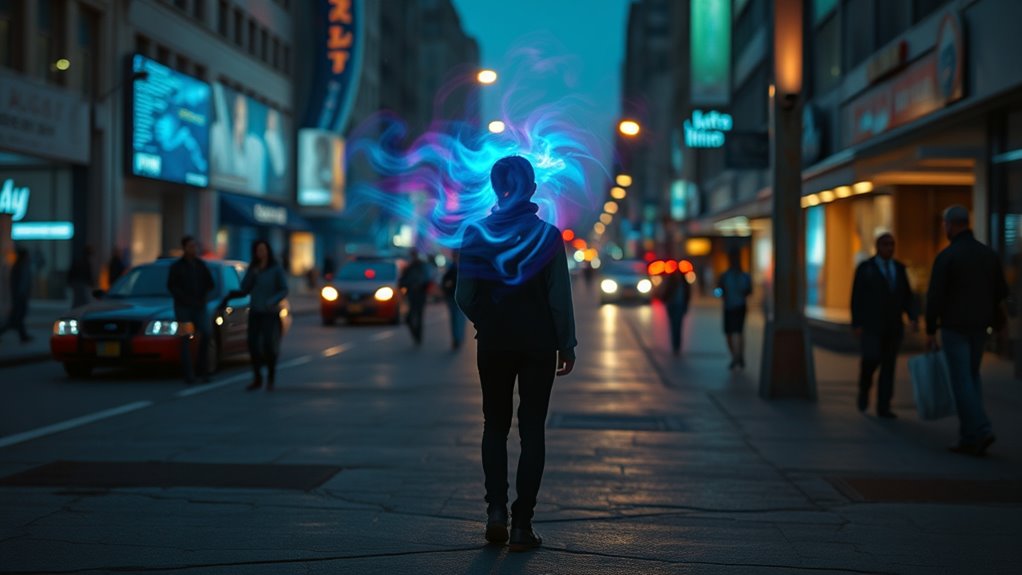
Societal stressors, such as economic instability, social unrest, and political upheaval, can substantially influence mental health and perceptual experiences. When you face constant uncertainty or chaos, your brain may become overwhelmed, leading to hallucinations or distorted perceptions. Stress triggers neurochemical changes that heighten sensory sensitivity, making you more prone to visual or auditory hallucinations. Prolonged exposure to societal turmoil can also cause feelings of paranoia, suspicion, or dissociation, which may manifest as hallucinations. These experiences aren’t just random; they often reflect your environment’s turbulence, amplifying emotional distress. Recognizing the connection between societal stressors and hallucinations can help you understand your experiences better and seek appropriate support or coping strategies during challenging times. Additionally, environmental stress factors such as noise pollution and overcrowding can further exacerbate perceptual disturbances and emotional strain.
Vulnerable Populations and Environmental Triggers
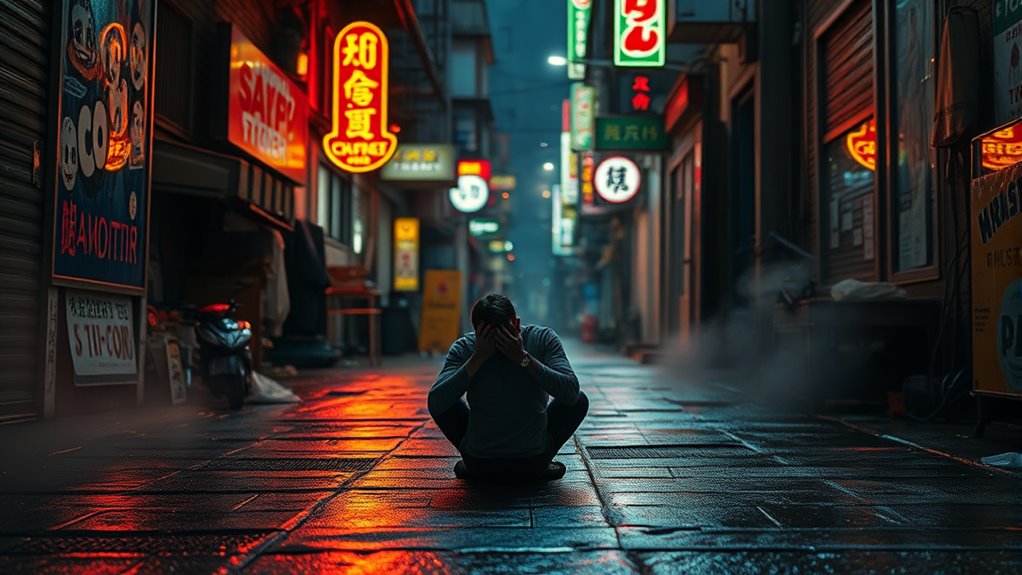
Certain groups are more vulnerable to environmental triggers that can induce hallucinations, especially those with pre-existing mental health conditions or developmental differences. You might notice that sensory overload from loud noises, bright lights, or chaotic environments can easily trigger hallucinations in these populations. Stressful surroundings or exposure to substance use can also heighten their risk. Being aware of these factors helps you understand why some individuals are more sensitive.
- People with schizophrenia or bipolar disorder often react strongly to environmental changes
- Children and the elderly may have heightened vulnerability
- Individuals with autism may experience sensory overload more intensely
- Those under significant stress or substance influence are more prone to hallucinations
Strategies to Mitigate Environmental Stress and Support Mental Well-being

Reducing environmental stressors can substantially lessen the likelihood of hallucinations and promote mental well-being. You can achieve this by creating calming spaces, minimizing noise, and maintaining good lighting. Practice mindfulness and stress management techniques like meditation or deep breathing to stay centered. Establish routines to add predictability and reduce anxiety. Here’s a quick guide to some strategies:
| Strategy | Benefit |
|---|---|
| Declutter your environment | Reduces sensory overload |
| Use calming colors | Promotes relaxation |
| Limit exposure to stressors | Lowers anxiety levels |
| Maintain a regular schedule | Enhances predictability and control |
| Incorporate nature elements | Boosts mood and reduces stress |
Implementing these steps can help you foster a supportive environment, strengthening your mental resilience.
Frequently Asked Questions
Can Seasonal Changes Trigger Hallucinations in Healthy Individuals?
Yes, seasonal changes can trigger hallucinations in healthy individuals. During darker months, reduced sunlight can affect your mood and mental state, leading to visual or auditory hallucinations in some cases. These are often linked to seasonal affective disorder (SAD). You might experience heightened sensitivity to environmental stimuli, which can sometimes cause hallucination-like experiences. Staying active, maintaining a routine, and getting enough light can help reduce these effects.
Do Specific Environmental Chemicals Have Long-Term Effects on Hallucination Susceptibility?
Environmental chemicals can indeed have long-term effects on your susceptibility to hallucinations. Certain substances like heavy metals, pesticides, and industrial pollutants may disrupt brain chemistry over time, increasing your risk. Exposure accumulation can alter neural pathways, making you more prone to hallucinations even after the initial contact. Staying informed and minimizing your exposure to harmful chemicals is vital to reduce this long-term impact on your mental health.
How Does Access to Green Spaces Influence Hallucination Frequency?
Access to green spaces can reduce how often you experience hallucinations by lowering stress and promoting mental well-being. When you spend time outdoors, nature helps calm your mind, improve mood, and decrease environmental stressors that might trigger hallucinations. Regular visits to parks or natural areas encourage relaxation and cognitive clarity, making you less prone to hallucination episodes. So, actively seeking green spaces benefits your mental health and reduces hallucination frequency.
Are There Genetic Factors That Affect Environmental Stress Responses Leading to Hallucinations?
Think of your genes as the blueprint of a garden, shaping how you handle storms. Yes, genetic factors influence your response to environmental stress, affecting hallucination likelihood. Some gene variants act like sturdy trees, resisting stress, while others are like fragile flowers, more prone to wilting under pressure. Your genetic makeup can set the stage for how intensely stress impacts you, potentially triggering hallucinations in vulnerable individuals.
Can Virtual Reality Environments Induce Hallucinations Similar to Real-World Stressors?
Yes, virtual reality environments can induce hallucinations similar to real-world stressors. When you immerse yourself in intense or immersive VR scenarios, your brain may respond as if experiencing actual stress, potentially triggering hallucinations. The realistic visuals, sounds, and sensations can overwhelm your senses, leading to perceptual distortions. This effect varies depending on individual susceptibility, the intensity of the environment, and your mental state during the VR experience.
Conclusion
Imagine walking through a city where the hum of traffic blurs into whispers, and the shadows dance just beyond your sight. Environmental stressors paint your mental landscape with fleeting illusions and distorted perceptions. By understanding these triggers, you can clear the fog and find calm amid chaos. Protecting your environment isn’t just about nature—it’s about safeguarding your mind. Take action today to nurture clarity and peace in your everyday world.
Fall Picks
fall essentials
As an affiliate, we earn on qualifying purchases.