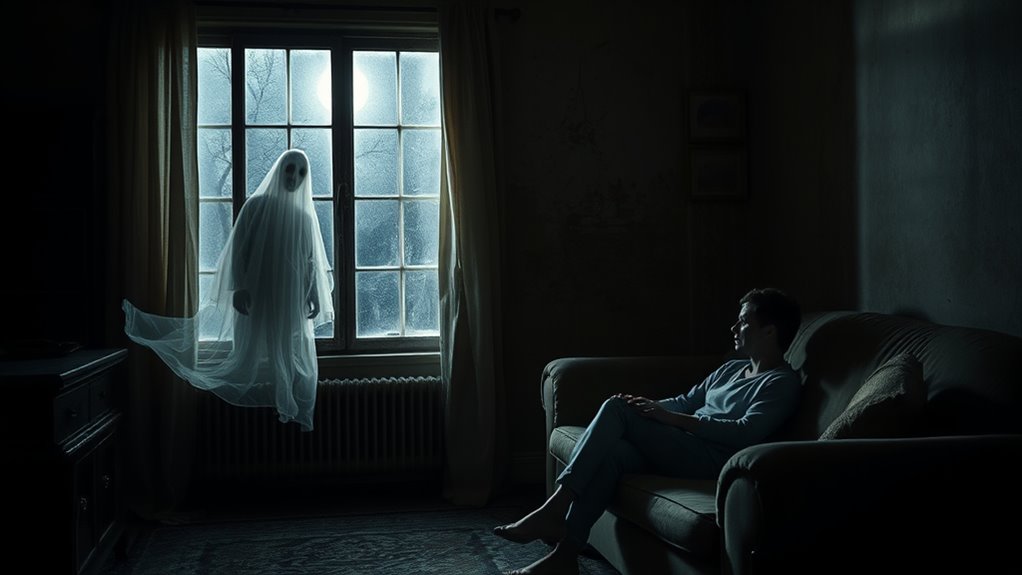

Many stories about ghosts knowing your thoughts are misunderstandings or natural explanations rather than supernatural powers. Cultural myths, media images, and emotional fears make it seem like spirits can read minds. People often misinterpret sounds, shadows, or feelings caused by drafts, stress, or hallucinations as ghostly responses. Recognizing these mental and environmental factors can clarify many paranormal perceptions. If you want to uncover how these beliefs develop and what truly causes these experiences, keep exploring the details below.
Key Takeaways
- There is no scientific evidence supporting that ghosts have mind-reading abilities.
- Media portrayals often exaggerate ghostly powers, including mind-reading, to create suspense.
- Perceived mind-reading by ghosts is typically due to misinterpretation or coincidence.
- Psychological factors like fear and expectation can make individuals believe ghosts know their thoughts.
- Natural explanations, such as environmental cues and hallucinations, better account for supposed mind-reading phenomena.
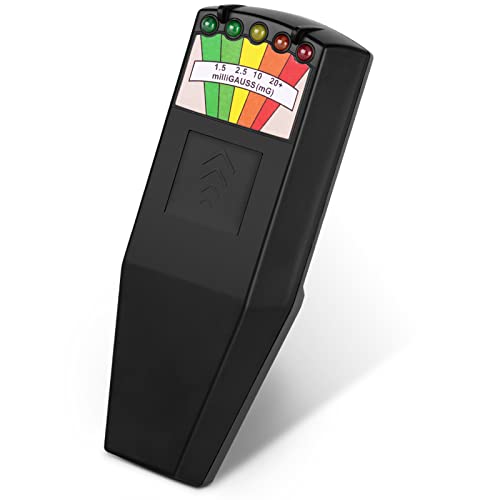
color tree Handheld LED EMF Magnetic Field Ghost Hunting Detector Electromagnetic Paranormal Equipment Tester 50Hz-20,000Hz Black
The EMF Meter Range for Ghost Hunting helps measure the electromagnetic fields to identify appliances that produce high-level…
As an affiliate, we earn on qualifying purchases.
As an affiliate, we earn on qualifying purchases.
Origins of the Mind-Reading Ghost Myth
Many people believe that ghosts can read minds, but this idea has little basis in fact. The myth likely stems from centuries-old stories where spirits seemed to predict or respond to thoughts, leading people to believe they had mental powers. In many cases, these stories involved misinterpretations of natural phenomena or heightened emotional states that influenced perceptions. Cultural influences also played a role, as some traditions depicted spirits as all-knowing entities. Historically, supernatural explanations filled gaps in understanding, making it easy to attribute extraordinary abilities to ghosts. Over time, these stories became ingrained in folklore, reinforcing the idea that spirits could read minds, even though there’s no scientific evidence supporting this belief. Additionally, psychological factors such as confirmation bias have contributed to the persistence of this myth, as people tend to interpret ambiguous events as confirmation of spirits’ mind-reading abilities.

MILESEEY TR10 Thermal Imaging Camera,Super Resolution 192 x 192 Thermal Camera,25 Hz Refresh Rate, -4°F to 1022°F Handheld Infrared Imager,8-Hour Battery Life Infrared Camera
【High Definition Thermal Imaging】The MILESEEY TR10 delivers enhanced 192×192 thermal clarity infrared sensor. Its 25Hz high refresh rate…
As an affiliate, we earn on qualifying purchases.
As an affiliate, we earn on qualifying purchases.
Common Stories That Reinforce the Belief
Many ghost stories you hear are fueled by spooky predictions in movies and TV shows. Personal anecdotes also play a big role, as they make these tales feel more real. These stories often reinforce your belief in ghosts, even when evidence is lacking. Additionally, shared cultural beliefs and superstitions can influence how stories about ghosts are told and perceived.
Spooky Predictions in Media
Have you ever noticed how movies and TV shows often depict ghosts predicting future events or warning of disasters? These stories make it seem like spirits have the ability to foresee what’s coming and communicate it to the living. Scenes of ghosts warning about fires, accidents, or even political upheavals are common. These portrayals reinforce the idea that spirits possess some kind of supernatural foresight. But in reality, these predictions are usually coincidences or dramatized for suspense. Media tends to dramatize ghostly abilities to create tension and mystery, not to reflect actual paranormal powers. This storytelling technique helps build fear and intrigue, but it shouldn’t be mistaken for evidence that ghosts can predict or read the future. Additionally, just as smart indoor gardens use science-backed techniques like hydroponics to maximize growth, stories about ghosts often rely on manipulated narratives to enhance their supernatural effects.
Personal Anecdotes and Stories
Stories of personal experiences often seem to confirm that ghosts possess the ability to predict future events. You might recall a time when a loved one’s spirit appeared just before a tragedy, or someone guessed details they couldn’t possibly know. These stories feel convincing because they tap into your emotions and the human desire for reassurance. People often share these anecdotes with certainty, believing they prove ghosts can read minds or foresee the future. However, many of these accounts rely on coincidence, memory bias, or storytelling embellishments. Our minds naturally seek patterns and meaning, especially in stressful or mysterious situations. While these stories are compelling, they don’t provide concrete evidence that ghosts have supernatural knowledge or mind-reading abilities.

Sam and Colby XPLR Spirit Box | Paranormal Detection Equipment; Haunted Survival; Ghost Hunter Scanner; EMF and EVP Detector; Comprehensive Tool for Spirit Communication
Designed by Viral Explorers Sam and Colby: Step up your ghost hunting game with the "Spirit Box," created…
As an affiliate, we earn on qualifying purchases.
As an affiliate, we earn on qualifying purchases.
Psychological Factors Influencing Perceptions
Your mind can be tricked by cognitive biases that make certain experiences seem more significant than they really are. Memory distortions can cause you to remember events differently, often fitting your expectations or fears. Additionally, your emotional state can heighten perceptions of paranormal activity, making you more likely to interpret ordinary sights and sounds as ghosts. Awareness of perceptual biases can help you better understand how your perceptions might be influenced by psychological factors.
Cognitive Biases at Play
Cognitive biases substantially influence how people interpret ambiguous or unusual experiences, often leading to the belief in ghosts. You might see a flickering shadow and automatically assume it’s supernatural, but your brain is trying to find meaning in randomness. Confirmation bias causes you to notice evidence that supports your belief in spirits while ignoring conflicting information. The availability heuristic makes vivid or recent ghost stories seem more plausible, skewing your perception of what’s real. Pattern recognition tricks your mind into seeing faces or figures where none exist, reinforcing ghostly explanations. These biases work together, shaping your perception and making you more likely to interpret ordinary events as paranormal. Recognizing these biases helps you understand how psychological factors influence your beliefs about ghosts. Additionally, understanding the role of Glycolic Acid Benefits for Skin can help in differentiating between real and perceived paranormal influences on your senses.
Memory Distortion Effects
Memory distortion plays a significant role in shaping how you perceive and interpret paranormal encounters. When recalling events, your mind can inadvertently alter details, filling gaps with assumptions or false memories. This process makes it easier to believe in supernatural explanations that fit your expectations. Factors influencing distortion include:
- The influence of suggestion or leading questions
- Repeated retellings that reinforce false details
- The brain’s tendency to prioritize emotional or vivid memories over accuracy
- Celebrity lifestyle insights reveal how personal perceptions can be influenced by social contexts and media portrayals, further affecting memory accuracy.
These distortions can create a convincing but inaccurate version of what happened, making you believe in encounters that never occurred or misremembering details of real events. Recognizing how memory can be skewed helps you understand why paranormal reports often contain inconsistencies.
Emotional State Influence
Emotional states can considerably influence how you perceive and interpret ambiguous or unusual stimuli. When you’re anxious, fearful, or excited, your mind is more likely to interpret normal sounds or shadows as something paranormal. Your mood shapes your expectations and heightens sensitivity to certain cues. For example, heightened vigilance during anxiety can lead to misinterpretations of sensory information, increasing the likelihood of perceiving ghosts or other supernatural entities where none exist.
Here’s a quick look at how emotions impact perceptions:
| Emotional State | Effect on Perception |
|---|---|
| Fear | Amplifies perceived threats |
| Anxiety | Heightens vigilance for anomalies |
| Excitement | Skews interpretation towards the extraordinary |
| Calm | Promotes rational assessment |
Your emotional state acts like a filter, often leading you to see what you expect or fear, rather than what’s truly there.
Sam and Colby XPLR Spirit Box | Paranormal Detection Equipment; Haunted Survival; Ghost Hunter Scanner; EMF and EVP Detector; Comprehensive Tool for Spirit Communication
Designed by Viral Explorers Sam and Colby: Step up your ghost hunting game with the "Spirit Box," created…
As an affiliate, we earn on qualifying purchases.
As an affiliate, we earn on qualifying purchases.
The Role of Media and Popular Culture

Have you ever noticed how movies, TV shows, and books shape our ideas about ghosts? They often portray spirits as mind-readers or supernatural beings with extraordinary powers. This media influence can lead you to believe that ghosts can read your thoughts or control your mind, fueling misconceptions. Popular culture emphasizes certain traits that stick in your mind, such as:
- Ghosts as all-knowing entities
- Spirits capable of mind-reading
- Paranormal powers reinforced by entertainment
These portrayals amplify fears and misconceptions, making you think that ghosts have abilities they likely don’t possess. Media shapes your perceptions, often blending fact with fiction, and creating a distorted view of what ghosts are really about. Recognizing this influence helps you differentiate between entertainment and reality. For example, understanding the role of media and popular culture in shaping beliefs can help you critically evaluate paranormal claims and dispel myths.
How Ghostly Encounters Are Usually Misinterpreted

When you hear sudden noises or see quick movements, your mind might jump to ghosts, but many times, there’s a natural explanation. Emotional reactions, like feeling chills or fear, are often misread as paranormal signs, even when they stem from stress or imagination. Personal signs, such as a sudden sense of presence, are frequently misunderstood, masking everyday causes like fatigue or environmental factors. Recognizing dog names that reflect personality traits can help you better interpret your pet’s behavior and distinguish natural reactions from supernatural ones.
Sudden Noises and Movements
Many people interpret sudden noises or unexpected movements as paranormal activity, but often, these experiences have natural explanations. Your mind can easily fill in gaps when sounds or motions occur unexpectedly, leading to misinterpretation. Common causes include:
- House settling or creaking due to temperature changes
- Pets moving or playing unexpectedly
- Objects shifting from vibrations or drafts
These subtle cues can trigger fear or suspicion, but they’re usually normal physical phenomena. Recognizing these natural causes helps prevent unnecessary panic. When you hear a loud noise or see a quick movement, consider simple explanations before assuming supernatural activity. Often, your surroundings or environment account for these sensations, and understanding this can ease your mind. Remember, not every noise or movement is a ghost—most are just normal, explainable events. Developing digital literacy can help you better understand and interpret environmental cues, reducing fear of the unknown.
Emotional Responses Misread
Often, your emotional state shapes how you perceive unexplained experiences, leading to misinterpretations of ghostly encounters. If you’re anxious or stressed, you might interpret normal sounds or shadows as signs of a ghost. Emotions can heighten your sensitivity, causing you to notice minor details that others overlook. For example, feeling lonely may make you more likely to interpret a draft or creak as a ghostly presence. Additionally, fear can distort your perception, making ordinary noises seem more sinister. Your mind fills in gaps based on your mood, leading you to believe in supernatural activity where there’s none. These emotional responses can create a feedback loop—heightening fear, which then intensifies perceptions—making it seem like a ghost is reading your mind or reacting to your feelings, when in fact, it’s your emotional state at play.
Misinterpreted Personal Signs
People frequently mistake personal signs for ghostly encounters because their minds interpret everyday cues as supernatural. You might interpret a sudden draft or flickering light as a spirit presence, but these are often natural phenomena. Your brain seeks meaning, especially in unfamiliar or stressful situations, leading to false alarms.
Common misinterpretations include:
- Feeling a sudden chill when no cold source exists
- Hearing unexplained noises in quiet moments
- Seeing fleeting shadows that resemble figures
These signs are often just normal environmental factors or subconscious cues. Your mind fills in the gaps with familiar patterns, making you believe you’ve encountered something supernatural. Recognizing these tendencies helps you differentiate between genuine ghostly signs and everyday misperceptions.
Scientific Investigations and Their Findings

Scientific investigations into ghost sightings often rely on controlled experiments and technological tools to determine whether these phenomena have a physical basis. Researchers set up cameras, audio recorders, and environmental sensors to capture evidence during supposed encounters. They analyze data for any signs of natural causes, like drafts, electromagnetic interference, or structural issues. Many studies find that what people interpret as supernatural activity often correlates with stress, fatigue, or hallucinations. When experiments are conducted under strict conditions, genuine paranormal activity is rarely observed. Instead, findings support explanations rooted in psychology, environmental factors, or misperceptions. These investigations aim to separate fact from fiction, helping you understand that most reported ghost sightings can be explained through scientific reasoning rather than supernatural abilities.
Differences Between Paranormal Activity and Psychic Abilities
Paranormal activity typically refers to unexplained phenomena like sightings, sounds, or objects moving without apparent cause, often reported in haunted locations. These events are usually transient and lack scientific explanation, making them seem mysterious. Psychic abilities, on the other hand, involve claimed mental powers such as telepathy, clairvoyance, or precognition. People with psychic abilities believe they can perceive or influence things beyond normal senses. It’s important to note:
- Paranormal activity involves external phenomena, while psychic abilities are about internal perception.
- Paranormal events often happen unpredictably, whereas psychic experiences are usually intentional or reported.
- Scientific evidence supporting psychic powers remains limited, unlike some phenomena attributed to ghosts or spirits.
Understanding these differences helps clarify why many attribute certain experiences to ghosts rather than psychic skills.
Why Fear and Emotion Play a Part in Haunted Experiences
Fear and strong emotions can profoundly amplify haunted experiences, causing perceptions to become distorted or exaggerated. When you’re scared or anxious, your mind becomes hyper-vigilant, easily misinterpreting normal sounds or shadows as paranormal activity. This heightened emotional state fuels your belief that you’re experiencing something supernatural.
| Emotional State | Effect on Perception |
|---|---|
| Fear | Amplifies sensory details, making them seem more intense |
| Anxiety | Heightens awareness, increasing false alarms |
| Excitement | Creates a craving for supernatural explanations |
Your emotions act as filters, shaping how you interpret ambiguous stimuli. In a haunted setting, fear and emotion don’t just influence your feelings—they actively distort what you perceive, making it more likely you’ll believe in ghostly activity.
The Impact of Confirmation Bias on Beliefs
Confirmation bias occurs when you notice and remember information that supports your existing beliefs while ignoring evidence that contradicts them. This bias shapes how you interpret ghost encounters, often reinforcing your assumptions. You might focus on coincidences or ambiguous events that seem to confirm paranormal activity, while dismissing natural explanations. To understand this better, consider how confirmation bias leads you to:
- Seek out stories that reinforce your beliefs while disregarding skeptical explanations
- Remember details that support your views more vividly than contradictory evidence
- Interpret neutral events as proof of ghosts, ignoring scientific reasoning
This tendency keeps your beliefs intact, making it harder to objectively evaluate experiences. Recognizing confirmation bias helps you see how your mind can influence what you believe about ghosts, often without realizing it.
Alternative Explanations for Apparitions and Sounds

Many sounds and visual disturbances that people interpret as ghosts can often be explained by natural causes. For example, creaky floors, drafts, or settling building materials create eerie noises that seem ghostly. Low-frequency sounds, called infrasound, can cause feelings of anxiety, dizziness, or chills, making you think there’s a presence nearby. Optical illusions, such as shadows or reflections, can resemble fleeting apparitions, especially in dim lighting. Sleep paralysis can also cause vivid hallucinations of figures or sounds, leaving you convinced a ghost is present. Additionally, psychological factors like stress, fatigue, or heightened emotions can make ordinary stimuli seem supernatural. Recognizing these natural explanations helps you approach supposed hauntings with skepticism rather than fear.
Frequently Asked Questions
Are There Any Credible Scientific Studies Supporting Ghost Mind-Reading Abilities?
There are no credible scientific studies that support the idea that ghosts can read minds. You might come across anecdotal reports, but these lack rigorous evidence and reproducibility. Scientific research relies on controlled experiments and verifiable data, which haven’t shown any ghostly mind-reading abilities. So, while it’s a fascinating idea, you should view claims of ghostly mind-reading abilities skeptically until solid scientific proof emerges.
How Do Cultural Differences Influence Beliefs in Ghostly Mind-Reading?
Cultural differences greatly shape your beliefs in ghostly mind-reading. In some societies, spirits are seen as possessing the power to read thoughts, reflecting deep-rooted spiritual traditions. In others, such ideas are dismissed or viewed skeptically. Your cultural background influences how you interpret ghostly behaviors; for example, in some cultures, mind-reading ghosts symbolize connection and guidance, while in others, they evoke fear or disbelief.
Can Psychological Conditions Cause People to Believe Ghosts Read Their Thoughts?
About 4% of Americans report experiencing hallucinations, which can make you think ghosts are reading your mind. Psychological conditions like schizophrenia or anxiety can distort your perceptions, leading you to believe that supernatural entities, including ghosts, can access your thoughts. If you’re under stress or sleep-deprived, these feelings intensify, making it easy to mistake your own mind for supernatural influence.
What Role Do Personal Experiences Play in Reinforcing the Ghost Mind-Reading Myth?
Your personal experiences strongly reinforce the myth that ghosts can read minds. When you sense a ghost knows your thoughts or feelings, it feels real because your mind seeks patterns and explanations. These experiences, especially if they’re emotional or unexplained, make you believe that ghosts have this supernatural ability. Over time, your memories and feelings cement this idea, making it seem more credible and convincing.
Are There Documented Cases of Genuine Paranormal Mind-Reading Phenomena?
You won’t find solid proof of genuine paranormal mind-reading phenomena. While many claim to experience extraordinary insights during ghostly encounters, scientific investigations often suggest these are misinterpretations or illusions. Personal stories can be compelling, but they don’t serve as concrete evidence. Instead, they fuel the belief that spirits might have such abilities, even though the scientific community remains skeptical, emphasizing the importance of critical thinking in exploring these mysterious claims.
Conclusion
So, next time you hear a strange noise or see a flicker in the corner of your eye, remember that ghosts likely can’t read your mind. For example, a haunted house might seem to know your fears, but it’s often just your mind filling in gaps. By understanding the psychological tricks and cultural stories at play, you can see these experiences for what they truly are—your mind’s way of making sense of the unknown.