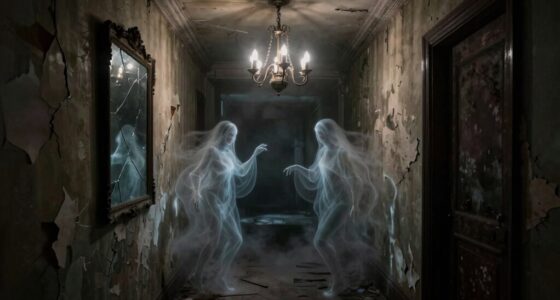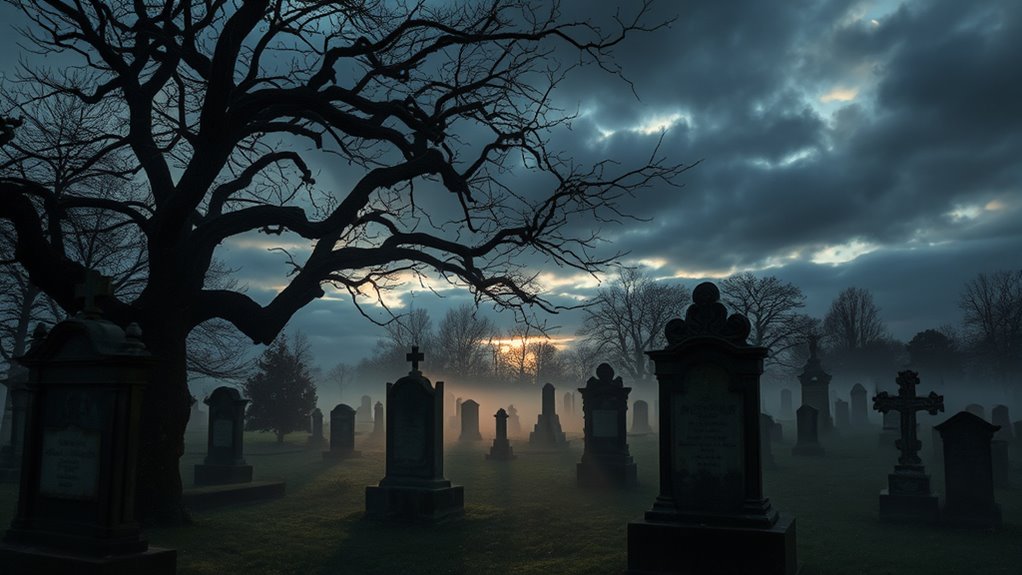
The myth that cemeteries are always haunted stems from cultural stories, media portrayals, and psychological effects that play on our fears, especially at night. Many believe spirits linger because of traditions honoring the dead or supernatural stories shared over generations. However, most reports are influenced by environmental factors, misinterpretations, or imagination, not actual hauntings. If you’re curious, you’ll discover how beliefs, media, and science all influence these spooky ideas.

Get movie nights delivered free with Prime
- Fast, free delivery on millions of items
- Prime Video, Amazon Music and more included
- Member-only deals all year
Key Takeaways
- Most cemeteries are not genuinely haunted; many stories are fueled by folklore, misinterpretations, and natural phenomena.
- Media and literature often exaggerate haunted qualities of cemeteries, reinforcing myths and fears.
- Cultural beliefs about spirits vary; not all view cemeteries as places of supernatural activity.
- Psychological factors like perception biases and environmental cues contribute to haunted experiences but are not proof of spirits.
- Investigations often find no definitive evidence of hauntings; many phenomena have natural or human explanations.
As an affiliate, we earn on qualifying purchases.
Origins of the Haunted Cemetery Myth
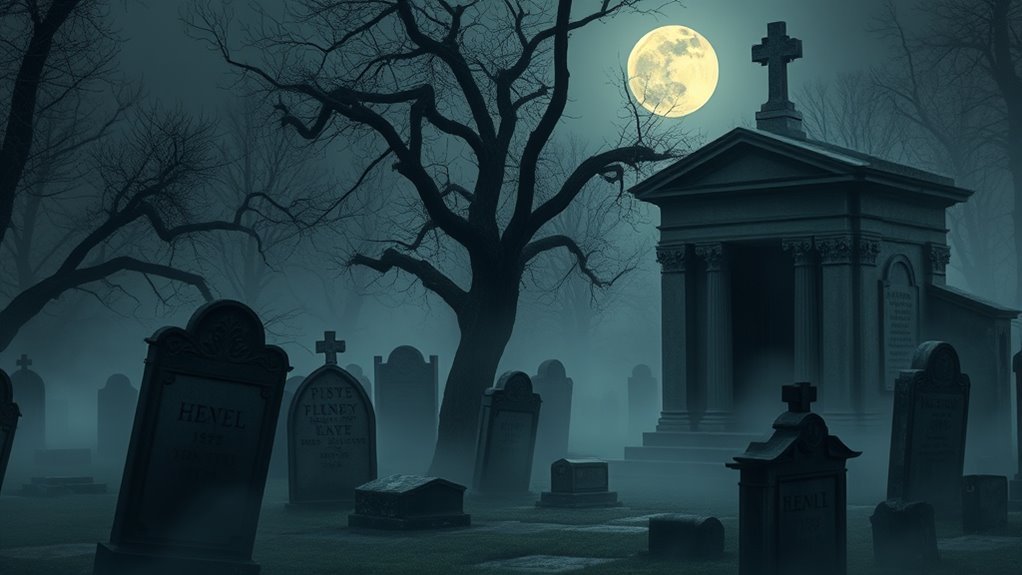
The idea that cemeteries are haunted has deep roots in history and folklore. Long ago, people believed spirits lingered around their resting places, especially if the body wasn’t properly laid to rest. Cultural stories often linked burial sites with supernatural activity, fueling fears and legends. Sometimes, unexplained sounds or sightings were thought to be spirits trying to communicate or seek revenge. These tales spread through storytellers, reinforcing the idea that cemeteries were spaces of restless spirits. Additionally, religious and societal beliefs about death shaped perceptions, emphasizing the importance of honoring the dead. Over time, these stories became ingrained in culture, transforming cemeteries into symbols of mystery and the supernatural, cementing their haunted reputation in collective imagination. Cultural beliefs about death and the afterlife further contributed to the association between cemeteries and hauntings.
spiritual ghost detection device
As an affiliate, we earn on qualifying purchases.
As an affiliate, we earn on qualifying purchases.
Cultural Perspectives on Death and Afterlife
You notice how different cultures have unique rituals and customs to honor the dead, shaping their views on what happens after death. Beliefs about spirits vary widely, from seeing them as guardians to fearing them as vengeful souls. These differences influence how communities perceive cemeteries and the presence of the supernatural. Additionally, perceptions of the afterlife are often influenced by economic and social factors, which can affect how societies approach burial practices and memorials.
Cultural Rituals and Customs
Across cultures, rituals and customs surrounding death reveal deeply held beliefs about the afterlife and the significance of honoring the departed. You might observe elaborate ceremonies, such as funerals, memorials, or ancestor offerings, that reflect respect and remembrance. In some traditions, you’re encouraged to prepare specific items or foods, believing they help facilitate the passage or provide comfort. You may participate in rituals like lighting candles, chanting, or making symbolic gestures to honor the dead’s spirit. These customs often serve to maintain a connection between the living and the departed, reinforcing communal bonds and shared values. Additionally, cultural rituals often incorporate unique symbols and practices that highlight the community’s perspectives on death and the ongoing relationship with ancestors. Understanding these practices allows you to appreciate how diverse societies interpret death—not as an end, but as a continuation of existence in various forms.
Beliefs About Spirits
Beliefs about spirits shape how different cultures interpret the afterlife and the ongoing presence of those who have passed away. Many cultures see spirits as guardians, ancestors, or messengers, influencing daily life and rituals. Some believe spirits linger near their resting places, while others think they move on to a different domain. These beliefs affect how communities honor their dead and interpret phenomena around cemeteries. Here’s a quick overview:
| Culture | Spirit Beliefs | Practices |
|---|---|---|
| Western | Spirits are ghosts needing closure | Funeral rites, memorials |
| East Asian | Spirits are ancestors watching over | Ancestral altars |
| African | Spirits are essential for community health | Rituals, offerings |
| Indigenous | Spirits connect living and dead | Ceremonies, storytelling |
| Modern | Spirits are symbolic, not literal | Meditation, memorials |
Additionally, some cultures believe that spiritual energy persists beyond physical death, influencing their interpretative practices and rituals.
Variations in Afterlife Views
Different cultures hold a wide range of views on what happens after death, shaping how you understand the journey of the soul or spirit. Some believe in an eternal paradise or hell, where your actions determine your future. Others see death as a passage to ancestors or a continuation of existence in another domain. For example, many Western societies focus on individual judgment, while many Eastern traditions emphasize reincarnation or rebirth cycles. Indigenous cultures might see death as a return to nature or a reunion with spirits. Your beliefs about the afterlife influence how you mourn, where you bury loved ones, and how you honor their memory. Recognizing these differences helps you appreciate that death isn’t viewed universally but through diverse cultural lenses. Additionally, the concept of afterlife varies significantly across regions, reflecting deep-rooted spiritual and cultural values.
As an affiliate, we earn on qualifying purchases.
The Role of Literature and Media in Shaping Beliefs
You likely encounter stories and images of haunted cemeteries in books, movies, and TV shows, which shape your ideas about their mysteries. These portrayals often emphasize ghosts and supernatural activity, reinforcing superstitions you might hold. Media’s influence can make cemeteries seem more ominous or haunted than they truly are. Additionally, the way cemeteries are depicted in brewing guides often exaggerates their eerie qualities for dramatic effect.
Portrayal of Cemeteries in Fiction
Fiction and media have long shaped our perceptions of cemeteries, often depicting them as eerie, haunted places where the supernatural lurks just beneath the surface. Horror movies, ghost stories, and novels frequently portray cemeteries as venues for spirits, restless souls, or dark rituals. These representations emphasize mystery and fear, reinforcing the idea that cemeteries are inherently haunted. Writers and filmmakers use dark imagery, atmospheric settings, and supernatural elements to evoke suspense and intrigue. While these portrayals captivate audiences, they distort reality, creating a myth that cemeteries are always haunted. In truth, media tends to exaggerate or sensationalize, influencing how you view cemeteries and fueling beliefs that they are inherently spooky or supernatural. Additionally, the portrayal of cemeteries often draws on atmospheric settings, which are carefully crafted to heighten feelings of suspense and fear.
Media’s Influence on Superstitions
Media plays a powerful role in shaping how you perceive cemeteries, especially through literature, movies, and folklore. These portrayals often emphasize haunted sites, reinforcing the idea that cemeteries are filled with spirits and supernatural activity. Horror films and ghost stories create vivid images of restless spirits lurking among headstones, making it seem inevitable that cemeteries are haunted. Literature, from Gothic novels to urban legends, further fuels these beliefs by depicting cemeteries as sinister or cursed places. This media influence influences your perceptions and fears, often blurring the line between fiction and reality. Additionally, the influence of sound healing science and sound vibrations in cultural narratives can subtly reinforce the idea that certain places, like cemeteries, are connected to supernatural energies. While these stories entertain, they also contribute to the myth that cemeteries are always haunted, shaping societal superstitions and reinforcing unfounded fears.
As an affiliate, we earn on qualifying purchases.
Psychological Factors Behind Haunted Perceptions
Many haunted experiences can be explained by psychological factors that influence perception. Your mind plays a powerful role in interpreting ambiguous stimuli, especially in unfamiliar or eerie settings like cemeteries. When you’re alone or feeling vulnerable, your brain may fill gaps with fear, creating sensations of presence or whispers. Cognitive biases, such as the tendency to see patterns or assign meaning to random noises, also contribute. Expectation and suggestion heighten these effects; if you believe a place is haunted, you’re more likely to interpret normal sounds or shadows as supernatural. Additionally, emotional states like anxiety or grief can distort perceptions, making ordinary occurrences seem extraordinary. Recognizing how your perception is shaped by psychological influences can help you understand why these experiences feel so real, even when they have no physical basis.
Environmental Elements That Contribute to Spooky Settings
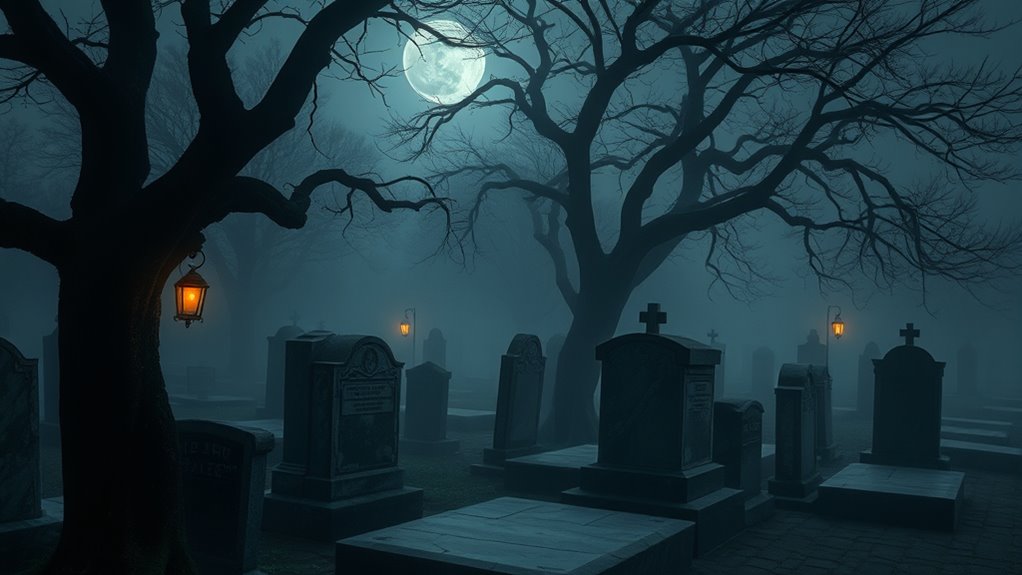
Environmental elements in cemeteries substantially heighten their spooky reputation, often amplifying psychological effects. Overgrown trees cast eerie shadows, creating a sense of neglect and mystery. Tombstones tilted or broken suggest age and forgotten stories, fueling fears of disrespect or unrest. Fog rolling over the grounds blurs visibility, heightening uncertainty and unease. Unkempt grass and scattered debris evoke abandonment, making visitors feel unwelcome or vulnerable. Cryptic symbols or unfamiliar headstone designs can trigger curiosity and suspicion. The quietness, broken only by distant sounds, intensifies feelings of isolation. Additionally, lighting conditions, such as dim or flickering lights, can further contribute to the haunting atmosphere. These elements combine to craft a setting that feels alive with hidden stories, making it easier for your mind to fill in the gaps with ghostly possibilities. All these factors work together to deepen the spooky ambiance of cemeteries.
The Impact of Nighttime and Lighting on Perceptions
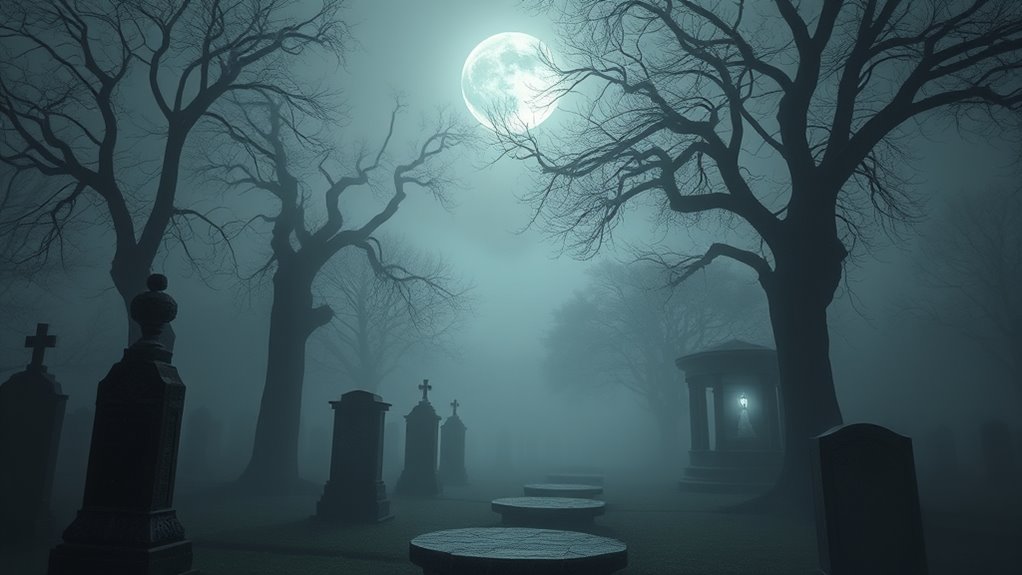
As night falls, the darkness transforms cemeteries into even more unsettling places, and lighting plays a crucial role in shaping your perception of these eerie grounds. Dim or flickering lights can heighten your senses, making shadows seem alive and sounds more haunting. Harsh floodlights may reveal details that diminish fear, while soft, uneven lighting creates mysterious silhouettes. Shadows cast by trees or monuments can mimic figures, fueling your imagination. The absence of light leaves gaps in visibility, encouraging your mind to fill in the gaps with fear. Proper lighting can either calm or alarm you, depending on how it’s used. Understanding how lighting influences your perception helps demystify the spooky reputation of cemeteries at night.
Darkness heightens fear by making shadows and sounds more haunting, while strategic lighting can calm or unsettle your senses.
- Soft lighting reduces shadows, easing fears.
- Flickering or uneven lights increase eeriness.
- Darkness amplifies imagination and uncertainty.
Notable Cases and Investigations of Haunted Cemeteries
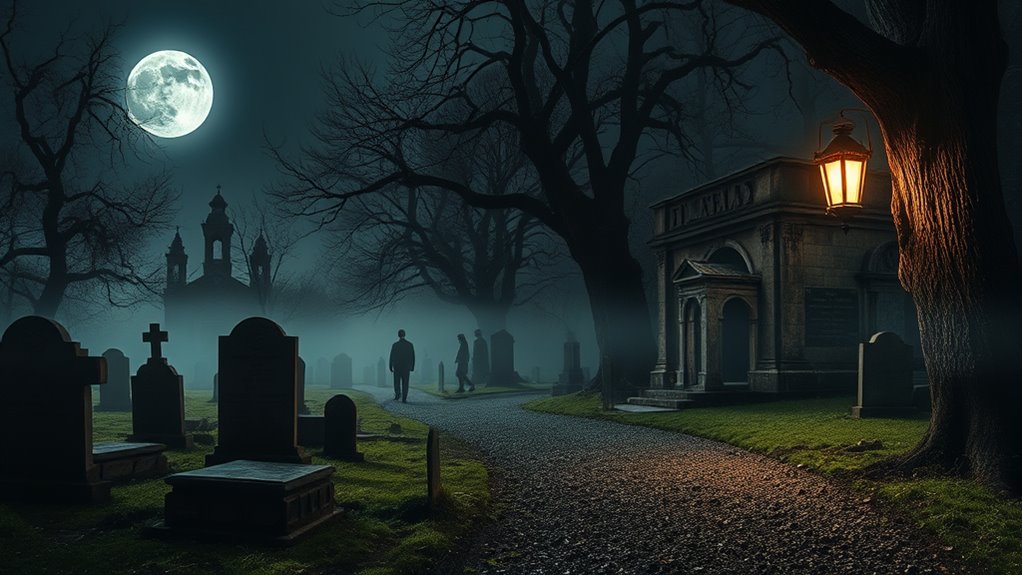
Numerous investigations have sought to uncover the truth behind haunted cemeteries, revealing compelling stories and unexplained phenomena. For example, the Stanleyville Cemetery in Nigeria reportedly hosts ghostly apparitions and mysterious sounds, attracting numerous paranormal researchers. Similarly, the Greyfriars Kirkyard in Edinburgh has a long history of ghost sightings linked to its turbulent past. These cases often involve EVP recordings, visual anomalies, or personal experiences that defy explanation. Here’s a quick overview:
| Cemetery | Notable Phenomenon | Investigator Findings |
|---|---|---|
| Stanleyville Cemetery | Apparitions, mysterious sounds | EVP recordings, eyewitness reports |
| Greyfriars Kirkyard | Ghost sightings, shadow figures | Photographs, personal accounts |
| Highgate Cemetery | Apparitions, unexplained noises | Audio recordings, witness testimonies |
Why Most Cemeteries Are Not Haunted
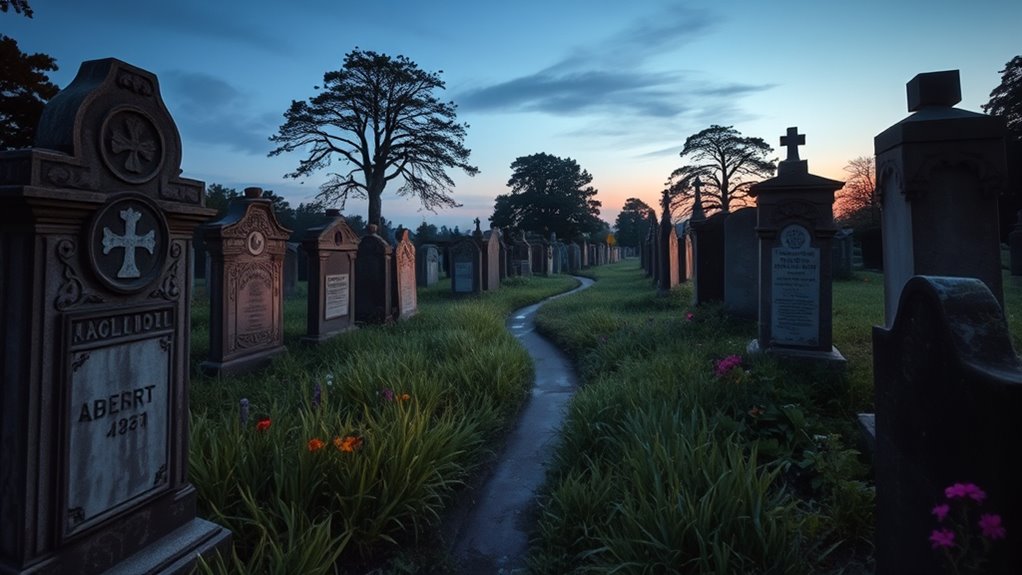
Many cemeteries are not haunted because the stories of ghostly activity often stem from misinterpretations, coincidences, or folklore rather than actual supernatural events. People might hear unfamiliar sounds or see shadows and immediately assume spirits are present. Over time, these stories get exaggerated, fueling the myth of haunted cemeteries. Additionally, natural factors like wind, animal activity, or uneven ground can create eerie effects that aren’t supernatural. Cultural beliefs and storytelling traditions also play a role in shaping ghost stories, even when no real evidence exists. Understanding these explanations helps you see that many haunting tales are more about perception than reality.
- Natural sounds and shadows often get mistaken for ghosts
- Folklore and cultural stories amplify fears
- Coincidences can seem like supernatural occurrences
How to Approach Cemetery Visits Respectfully and Safely
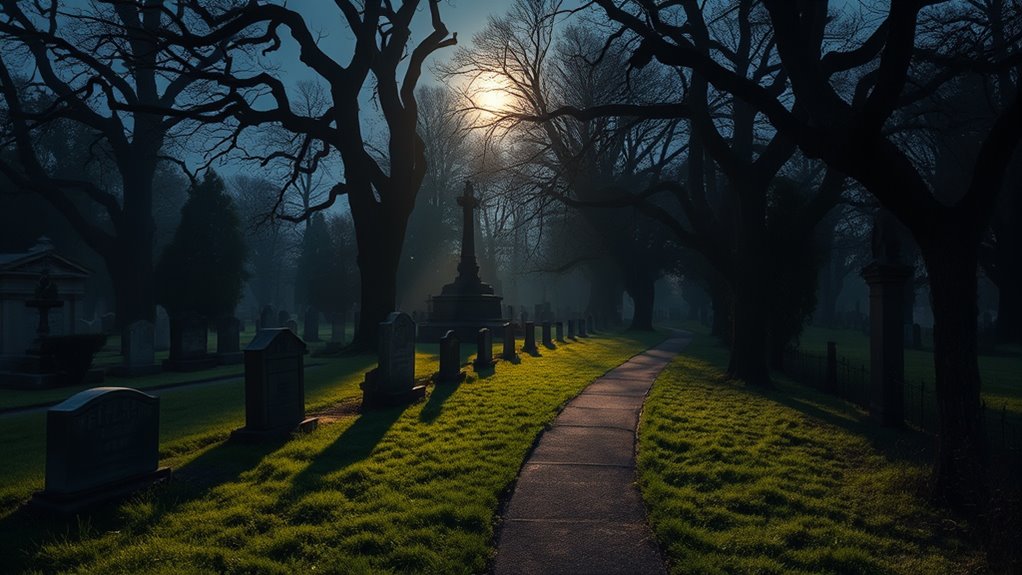
Visiting a cemetery requires respect and mindfulness to honor those laid to rest and guarantee your own safety. Always arrive during daylight hours and stick to designated paths to avoid disturbing graves or damaging the grounds. Be respectful by speaking softly, refraining from loud noises, and avoiding disruptive behavior. Dress appropriately—comfortable and unobtrusive clothing shows respect. Bring essentials like water and a flashlight if needed, especially for evening visits. Remember to leave no trash behind and avoid touching or moving any memorials. Be mindful of local rules and signs, and always seek permission if required. Approach the site with reverence, patience, and caution, ensuring your visit is respectful for both the deceased and yourself.
Frequently Asked Questions
Are There Scientific Explanations for Reported Haunted Cemetery Experiences?
Yes, there are scientific explanations for reported haunted cemetery experiences. Often, these sensations are caused by psychological factors like suggestibility, fear, or expectation. Environmental factors such as low lighting, temperature changes, or drafts can also trigger feelings of unease or hallucinations. Additionally, sleep deprivation, stress, or the power of suggestion can lead you to interpret ordinary sounds or sights as paranormal, making it seem like the cemetery is haunted.
How Do Local Traditions Influence Beliefs About Haunted Cemeteries?
Local traditions shape your beliefs about haunted cemeteries by passing down stories, legends, and rituals that reinforce the idea of spirits lingering. These cultural practices often involve specific ways of honoring the dead or avoiding certain areas, which influence how you perceive strange occurrences. When you follow these traditions, they deepen your connection to the site and make you more likely to interpret unusual events as supernatural.
What Are Common Misconceptions About Spirits and Hauntings in Cemeteries?
Many believe spirits haunt cemeteries constantly, but this isn’t true. Most sightings are misinterpretations or urban legends. Spirits, if they exist, are usually linked to specific events or emotions rather than random hauntings. You should question sensational stories and consider scientific explanations, like environmental factors. Remember, cemeteries are peaceful resting places, and the idea of them being perpetually haunted is largely a myth, not a fact.
Can Environmental Noise Contribute to Spooky Perceptions in Graveyards?
Yes, environmental noise can definitely contribute to spooky perceptions in graveyards. Sudden sounds like wind, distant voices, or animals can trick your mind into thinking there’s something supernatural happening. When you’re already feeling uneasy, these noises heighten your senses and make you interpret ordinary sounds as eerie or haunted. It’s a natural response, but understanding it helps you realize that most spooky experiences are just your mind reacting to the environment.
How Do Urban Legends Affect Public Perceptions of Cemetery Hauntings?
Imagine you’re scrolling through social media when an urban legend about haunted cemeteries pops up. These stories shape your perceptions, making you more likely to believe in ghostly encounters. They often exaggerate or distort facts, fueling fear and curiosity. As a result, you might view cemeteries as spooky places rather than peaceful resting spots. Urban legends influence how you interpret strange sounds or sights in graveyards, blending fact with fiction.
Conclusion
Remember, the idea that cemeteries are always haunted is like a shadow cast by a flickering lantern—brightening some stories while dimming others. By understanding the cultural, psychological, and environmental factors at play, you can approach these sites with respect and curiosity rather than fear. So, next time you visit a cemetery, see it as a quiet garden of history rather than a place of ghostly whispers, and appreciate the stories it holds beneath the surface.
Columbus Day / Indigenous Peoples' Day Picks
long weekend sales
As an affiliate, we earn on qualifying purchases.